
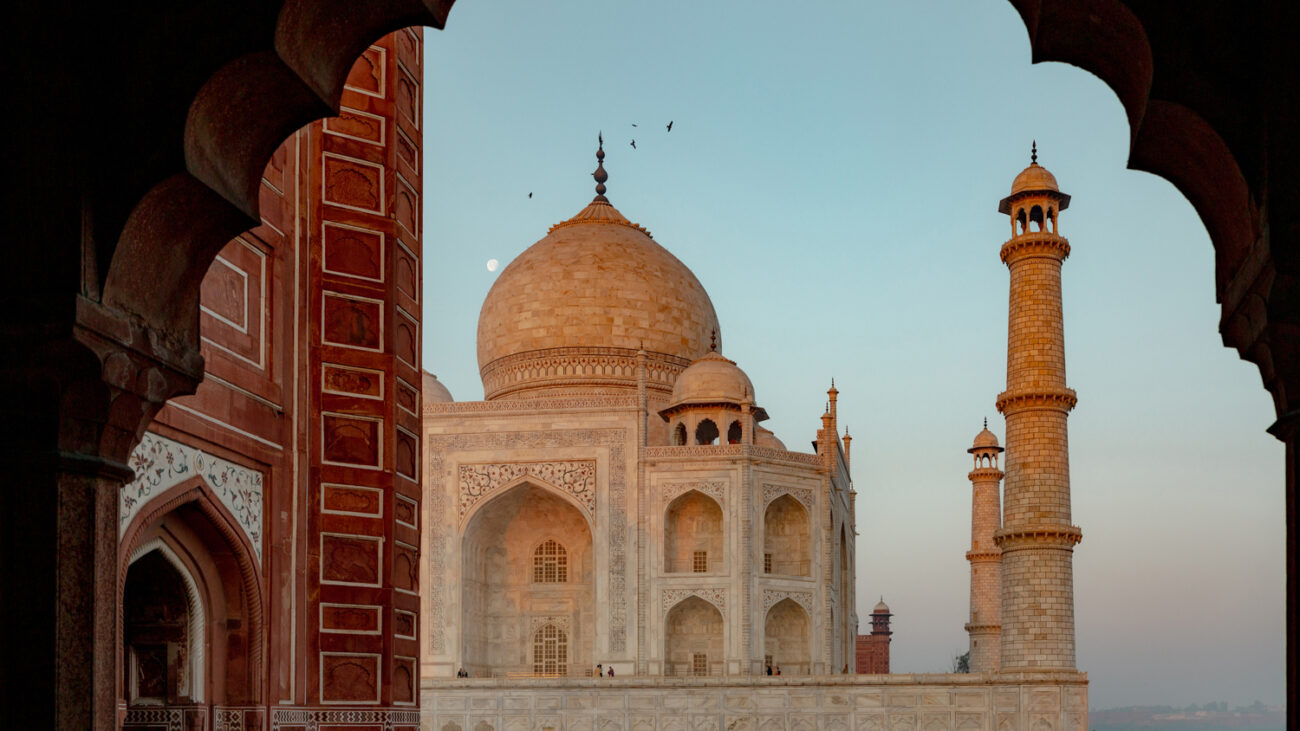

India belongs on every travel bucket list. It is a visual masterpiece filled with colour, rich culture and an incredible sense of spiritual energy. Even with a short itinerary, careful planning makes it possible to experience the highlights without ever feeling rushed. I loved starting the days early, when the streets were quieter, the light was softer and the atmosphere felt especially magical. From colourful markets and historic architecture to quiet spiritual moments, there was endless inspiration around every corner. The golden hour light made everything even more captivating and kept my camera busy from morning until evening. Looking back, booking this trip was one of the best creative decisions I could have made. India left me inspired, with countless memories and photographs that I will treasure for a long time.
TRAVEL & PHOTO CONDITIONS
| Time | March 2024 |
|---|---|
| Weather | Very Dry | Sunny ☀ |
| Temperature | 24–32°C |
| Photo Potential | |
| Physical Difficulty | |
| Accessibility | |
| Crowd Level | |
| Value for Money |
TRIP ESSENTIAL BOOKINGS
ACCOMMODATION
Ad / Affiliate links | Find your accommodation with Booking.com
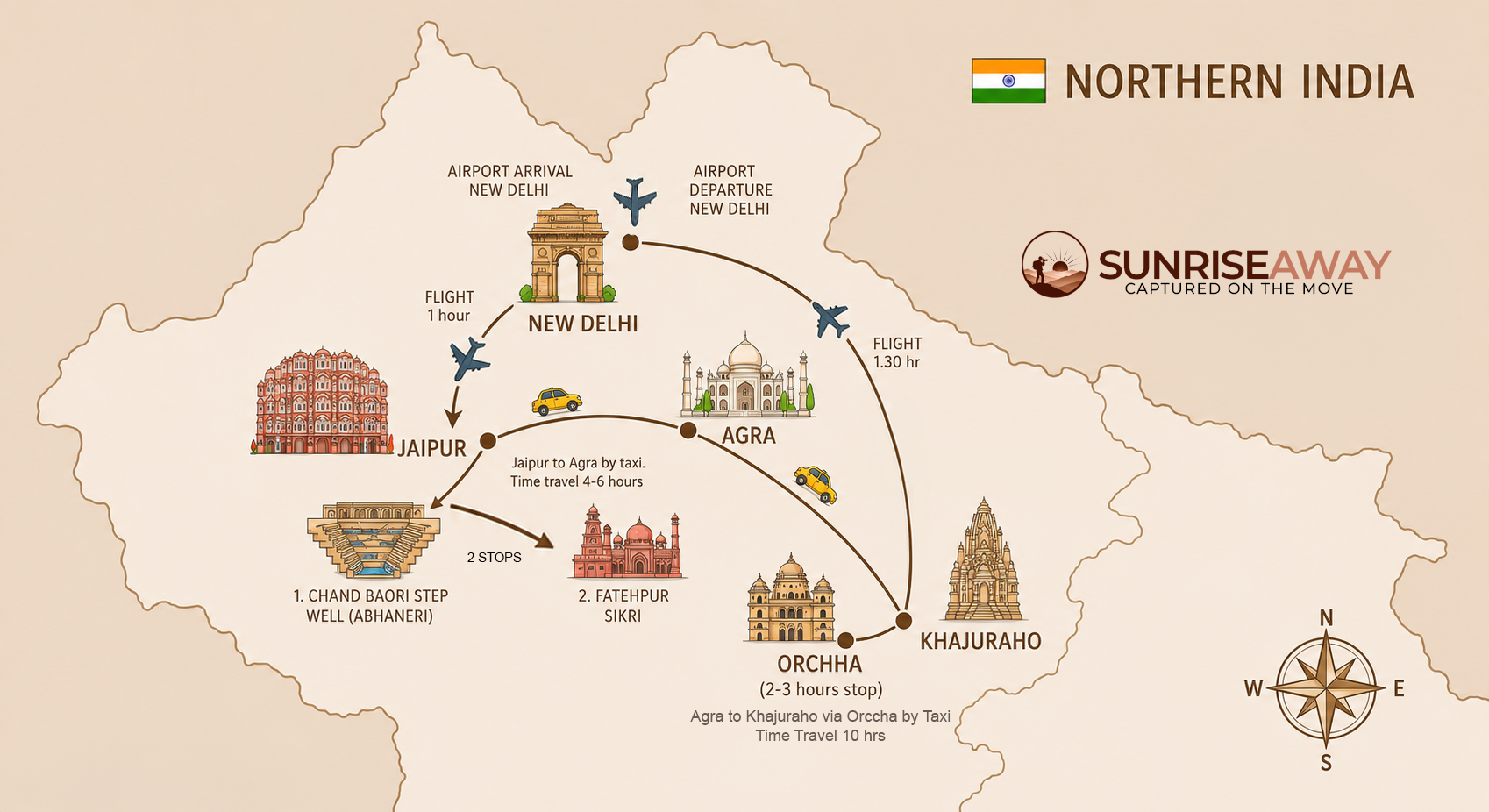
THE 9-DAY PHOTOGRAPHY ITINERARY
Our 10 day journey through northern India begins in Jaipur, where the colour, architecture and energy immediately make it an exciting place to photograph. From the grand forts and ornate palaces to the lively streets and colourful bazaars, there is something to capture around every corner. We particularly enjoy the early mornings, when the streets are quieter and the softer light creates a completely different atmosphere. From Jaipur, we travel by taxi to Agra, taking in the changing scenery along the way. The highlight is, of course, the Taj Mahal, where seeing the white marble in the early morning light is an unforgettable experience. From Agra, we continue to Khajuraho to explore its remarkable temples and intricate stone carvings, before flying back to Delhi to complete our journey. The itinerary is full, but we find the pace rewarding and it allows us to experience a wonderful variety of India within 10 days. There is plenty of walking, uneven ground and the occasional chaos that comes with travelling through busy cities and historic sites, so patience and flexibility are important. For us, though, this is all part of the experience. The combination of beautiful light, incredible architecture, colourful everyday life and unexpected moments makes India an endlessly inspiring destination for photography.
- Days 1–3: Jaipur – The Pink City
- Days 4–5: Agra – Eternal Monuments
- Day 6: Khajuraho – Temple Sculptures
- Days 7–9: Delhi – Capital Contrasts
Days 1–3: Jaipur – The Pink City
Day 1: Arrival
Day 2: Architectural Textures & City Symmetries
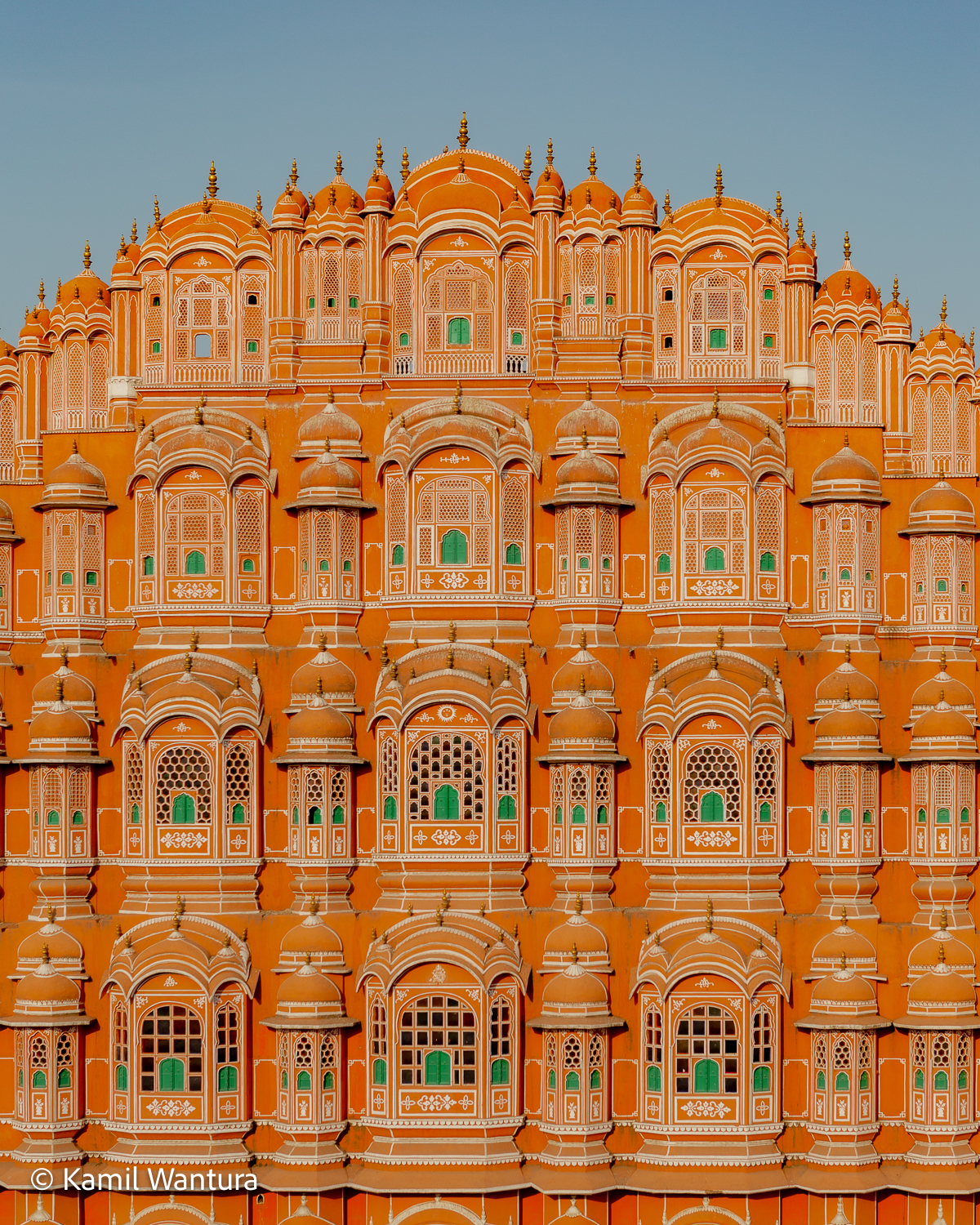
Hawa Mahal (📍MAP)
We visit the “Palace of the Winds”, where the intricate honeycomb pink sandstone facade is illuminated perfectly by the early morning sun.
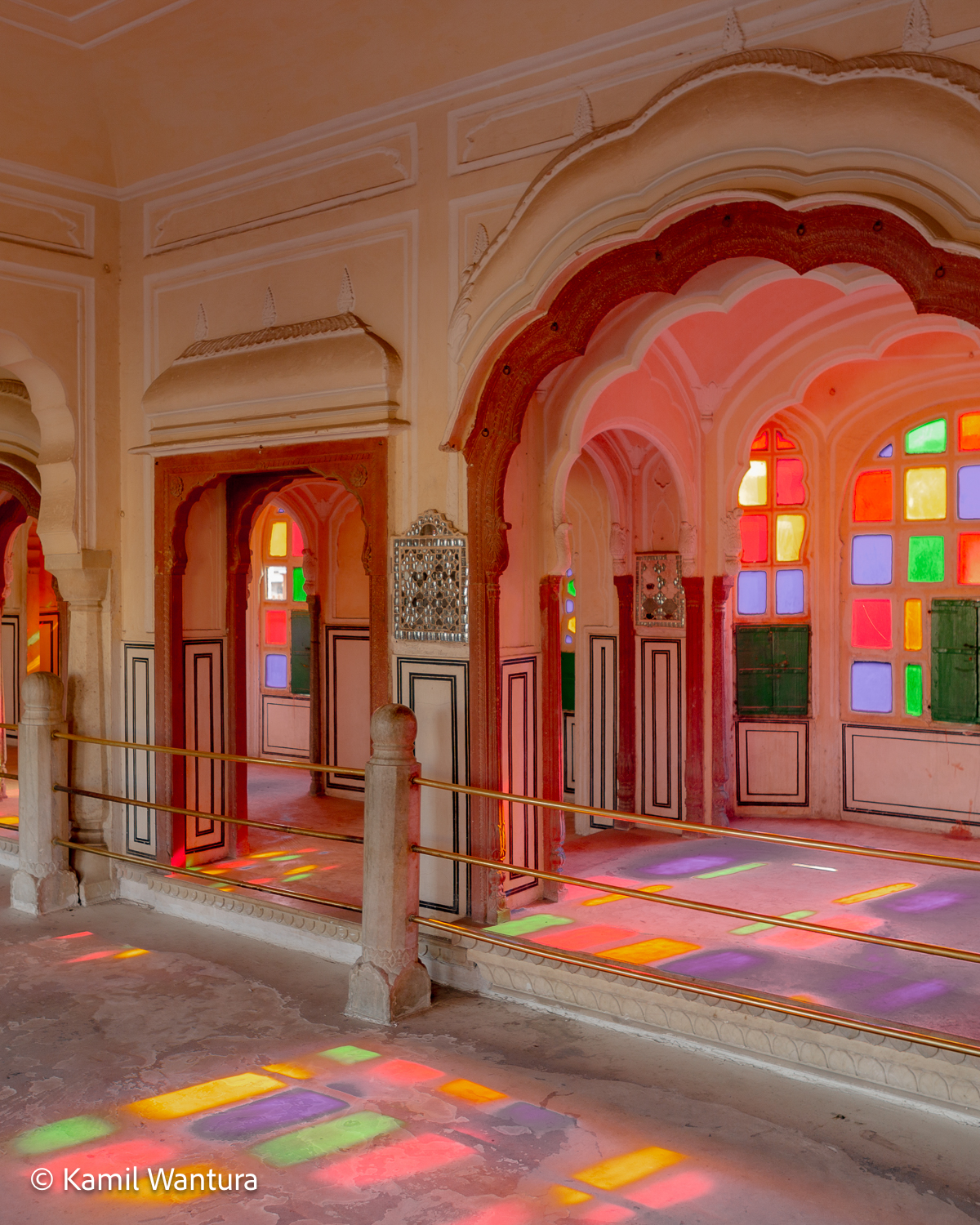
The City Palace (📍MAP)
We explore this sprawling complex displaying a blend of Rajasthani and Mughal styles.
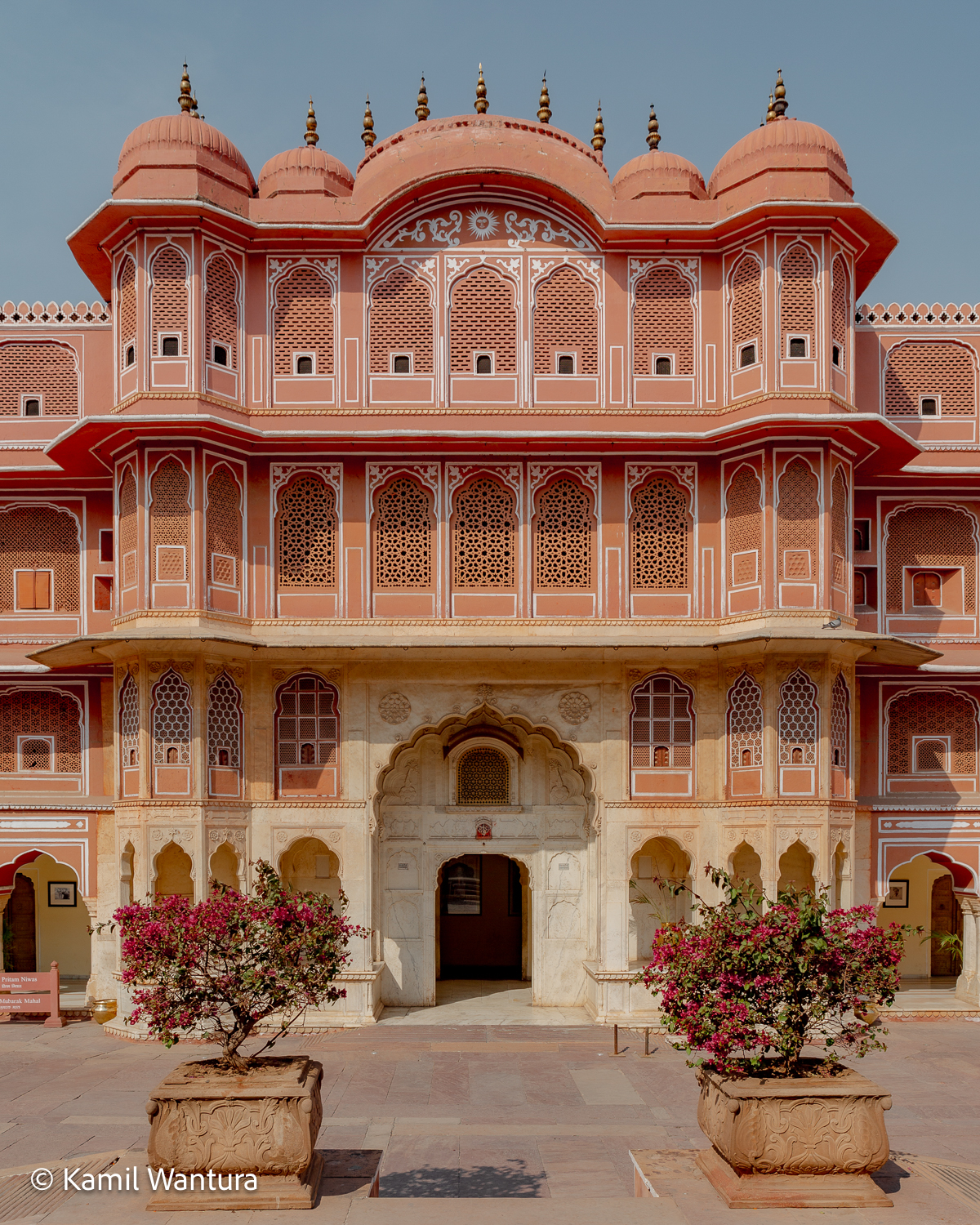
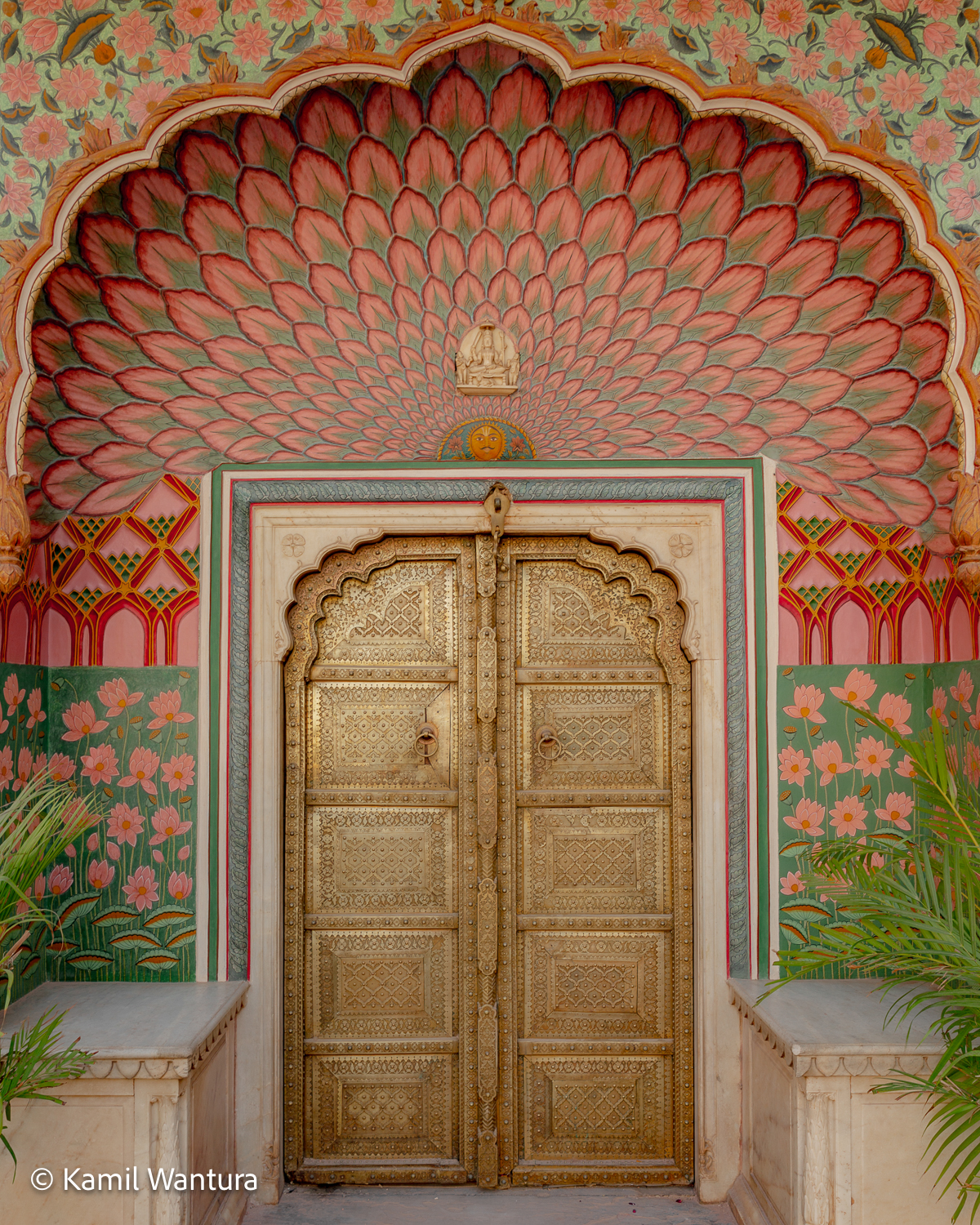
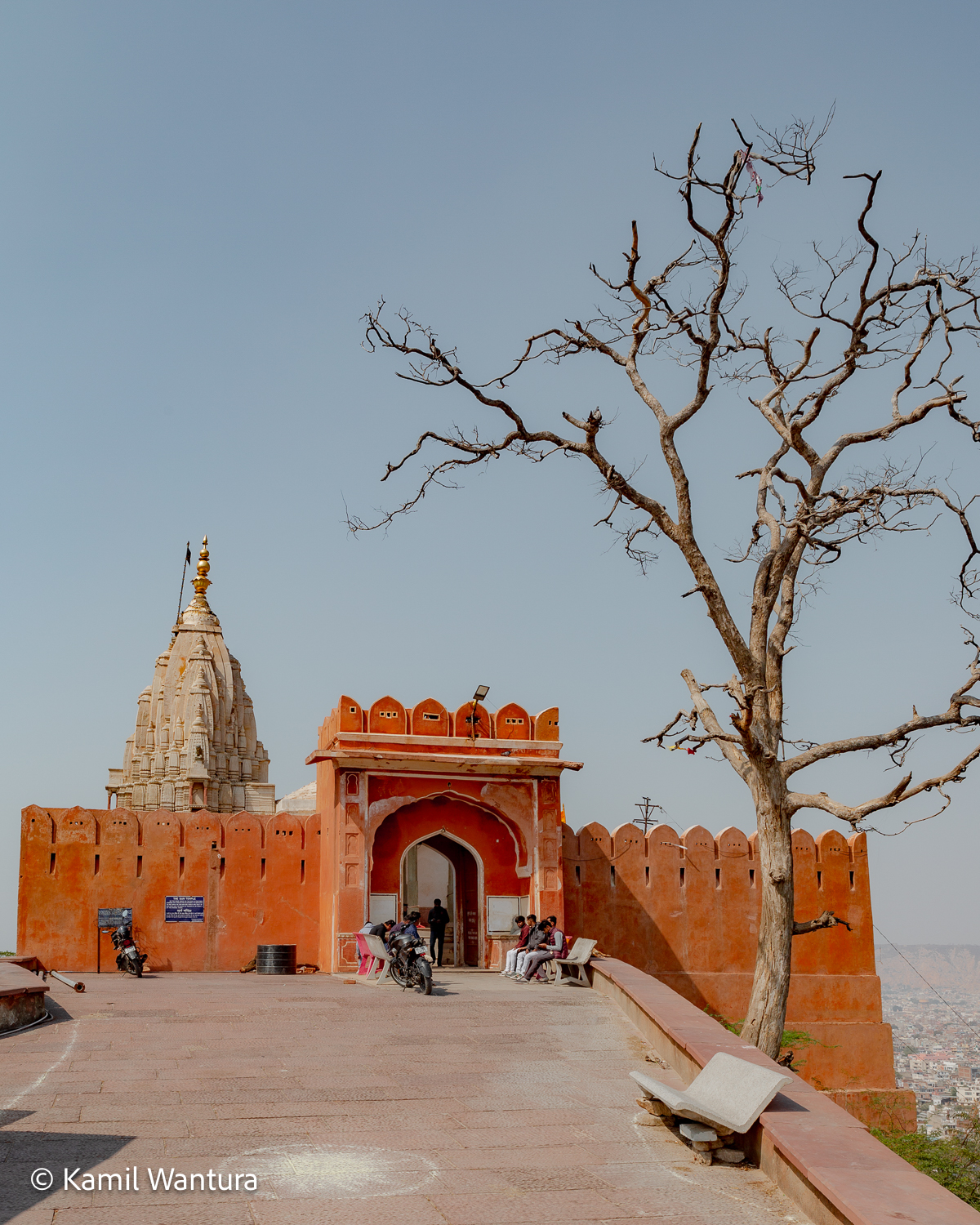
We visit Surya Mandir (📍MAP) for a hilltop perspective that captures the landscape of the Aravalli hills beautifully.
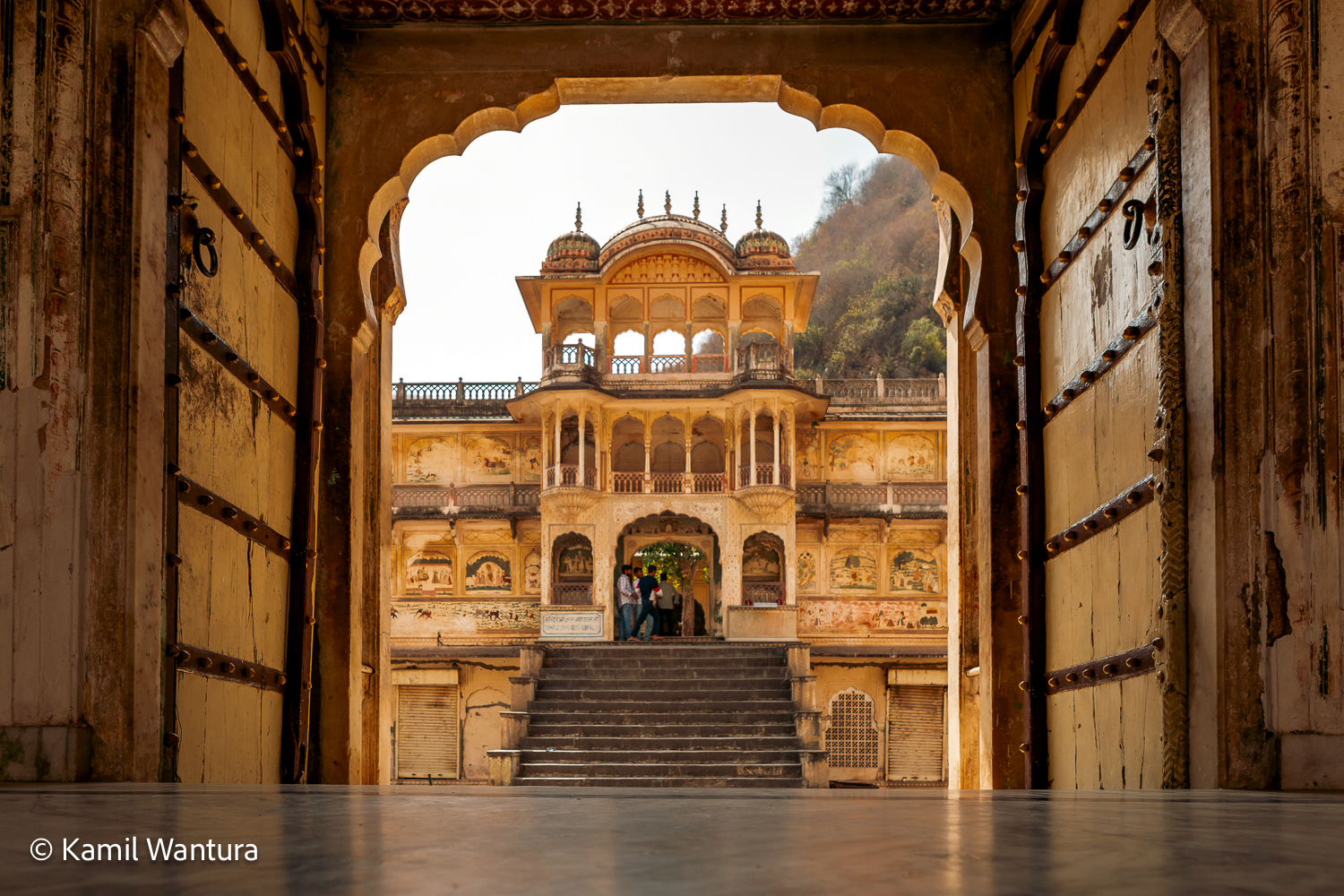
Shri Galta Peeth (📍MAP) We also explore the “Monkey Temple”, which is excellent for capturing nature and wildlife photography against the backdrop of ancient, spiritual architecture.
Day 3: Fortresses & Symmetrical Waterways
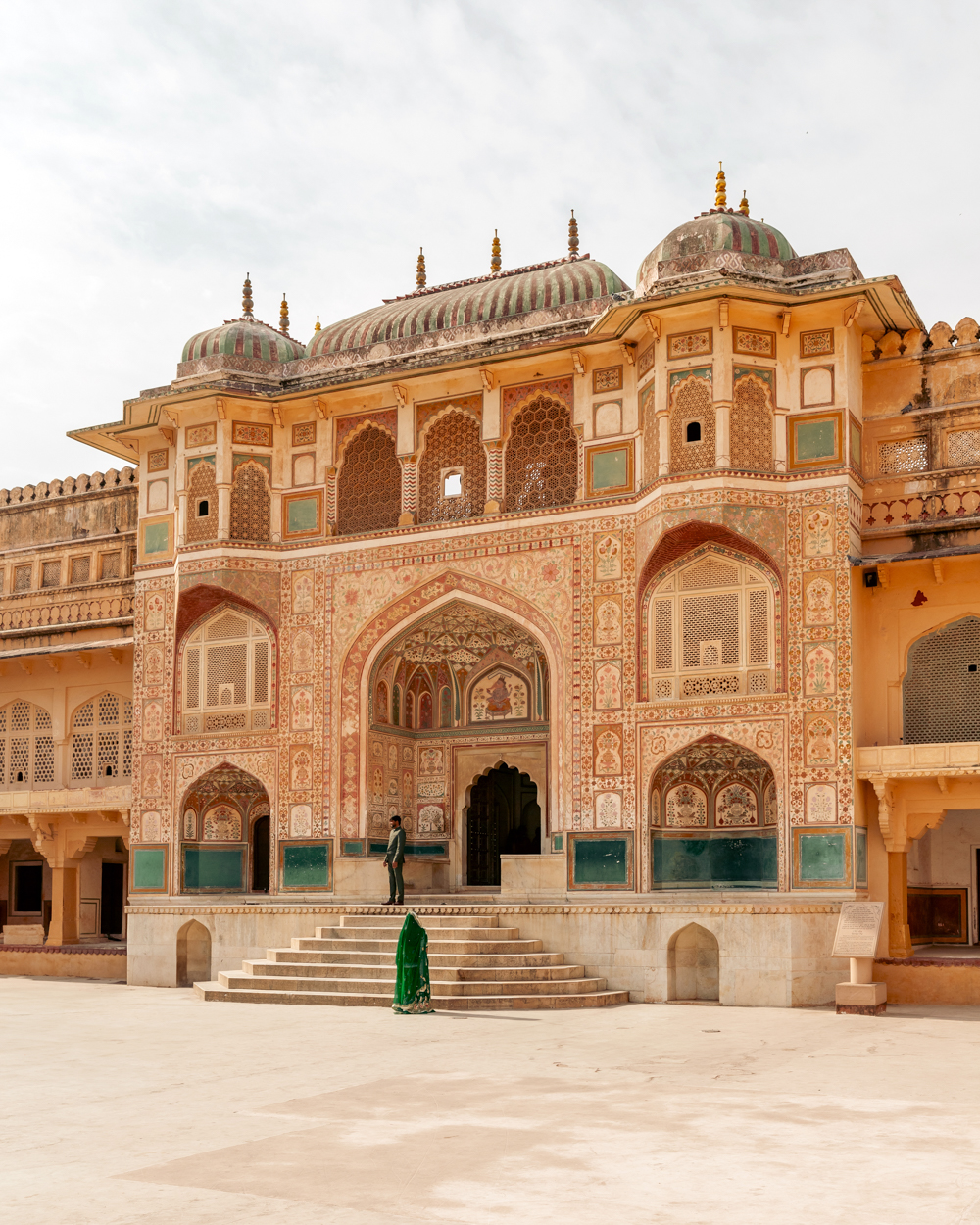
Amber Fort (Amer Fort) (📍MAP)
We visit this extensive fort perched on a hill, where red sandstone and marble catch the early golden light beautifully.
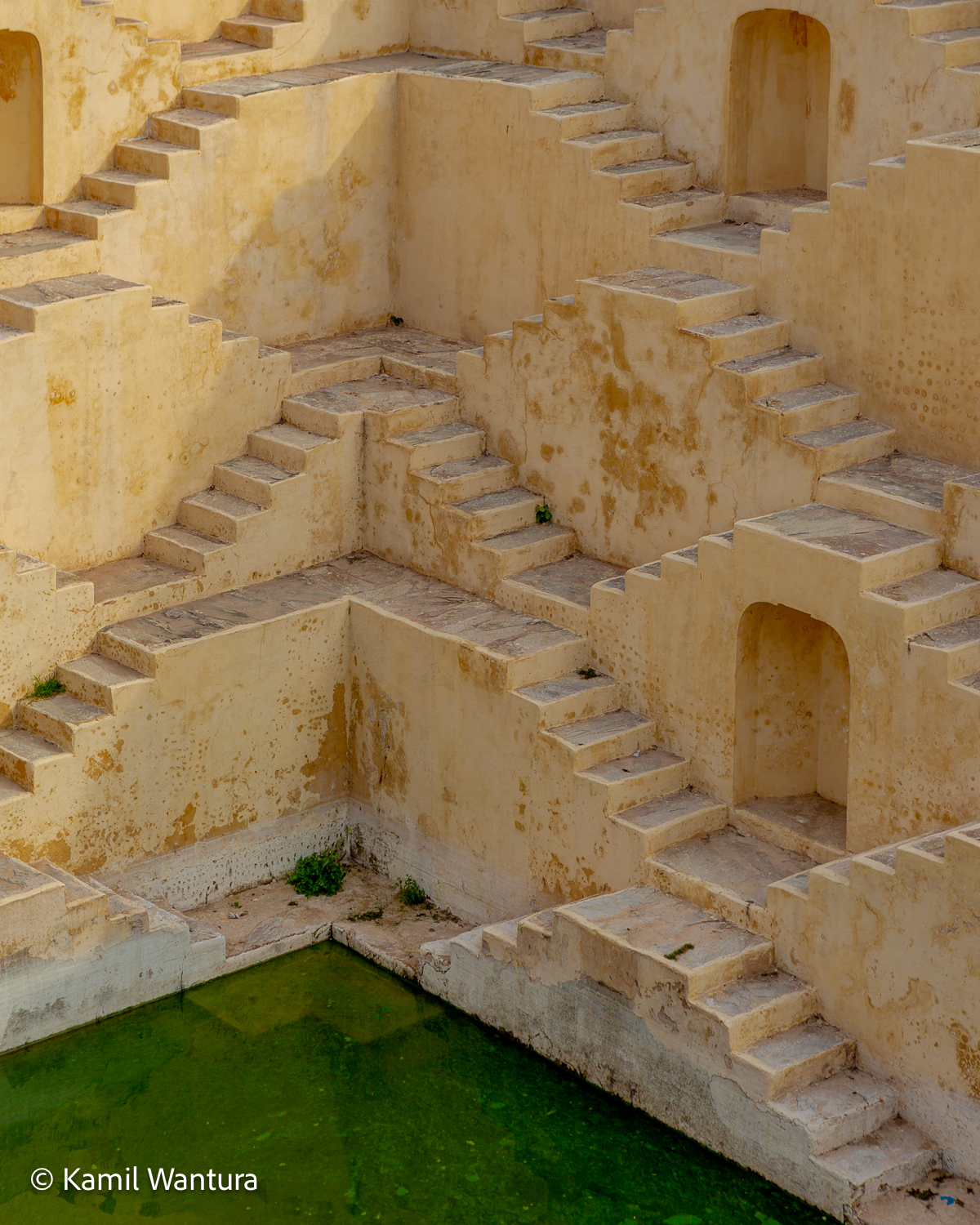
Panna Meena ka Kund (📍MAP)
We explore this historic stepwell, located just a short drive from Amer Fort, with its highly geometric pattern of yellow-toned steps.
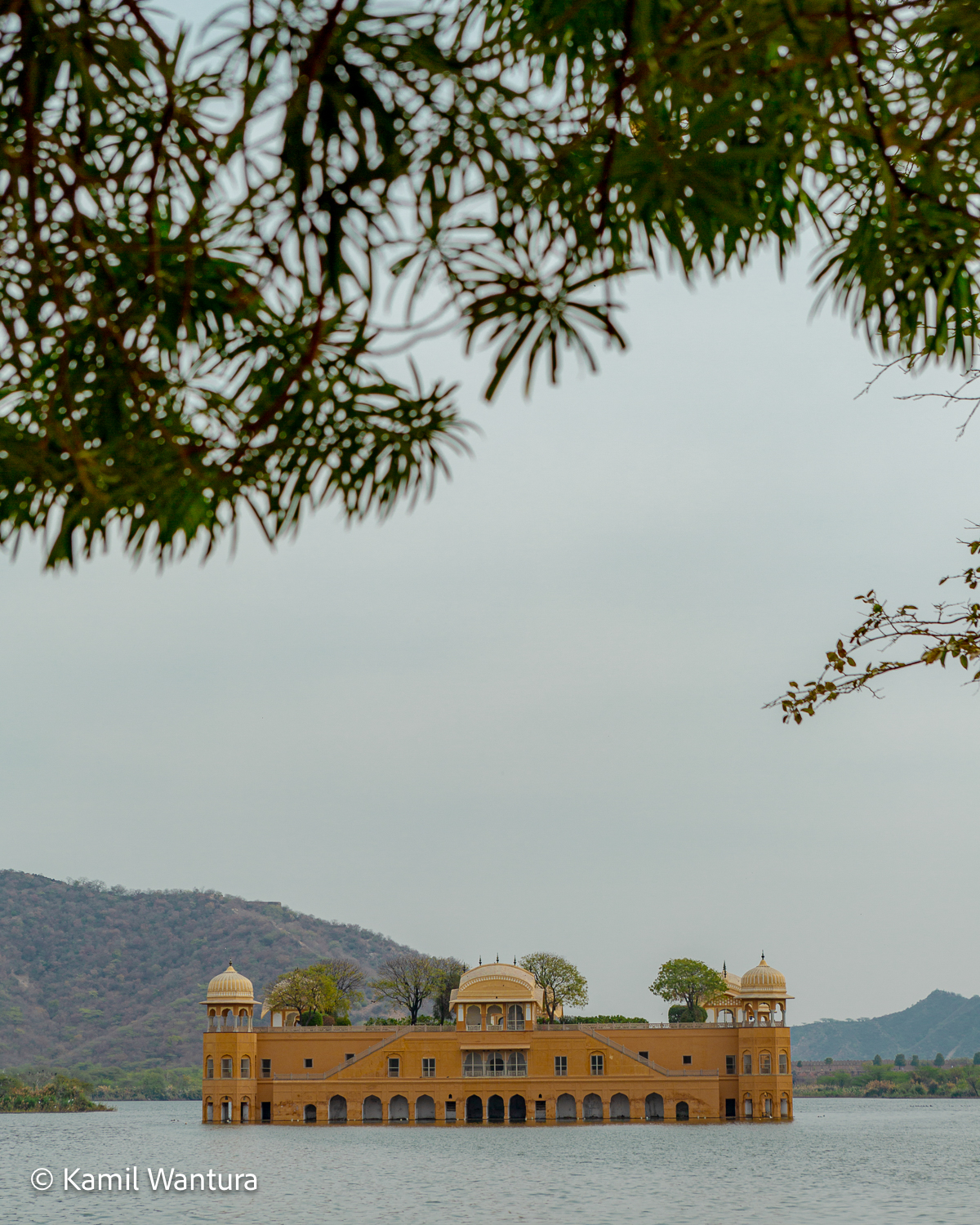
Jal Mahal (📍MAP)
We stop at the Water Palace, which sits serenely in the middle of Man Sagar Lake.
Days 4 – 5: Agra – The City of Love
Day 4: The Photographic Road Trip by Taxi to Agra
We leave Jaipur early in the morning by road and discover striking historic points of interest that break up the drive.
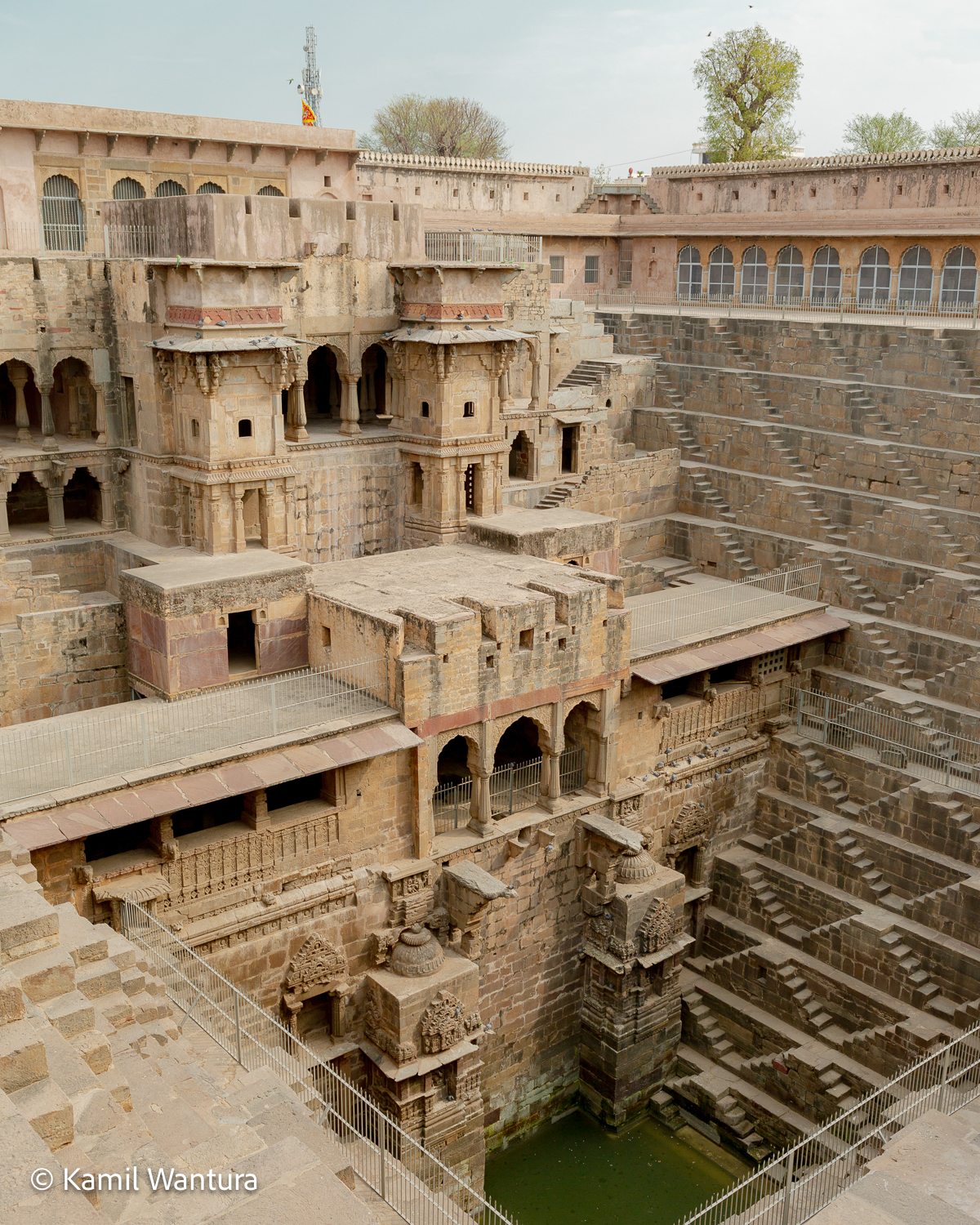
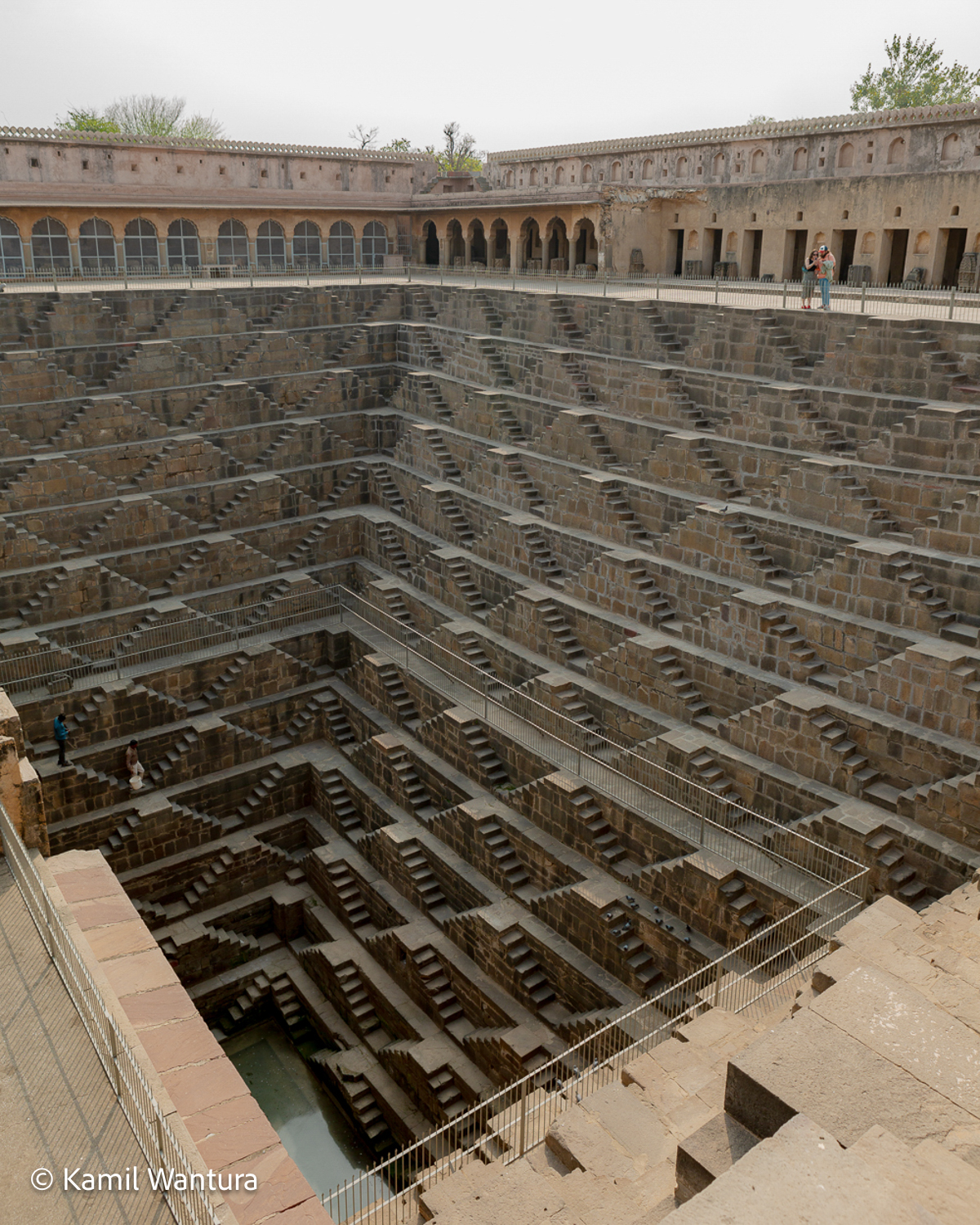
Chand Baori, Step Well (Abhaneri) (📍MAP)
We explore one of India’s largest and deepest stepwells, containing over 3,500 narrow, perfectly aligned steps plunging 13 stories deep.
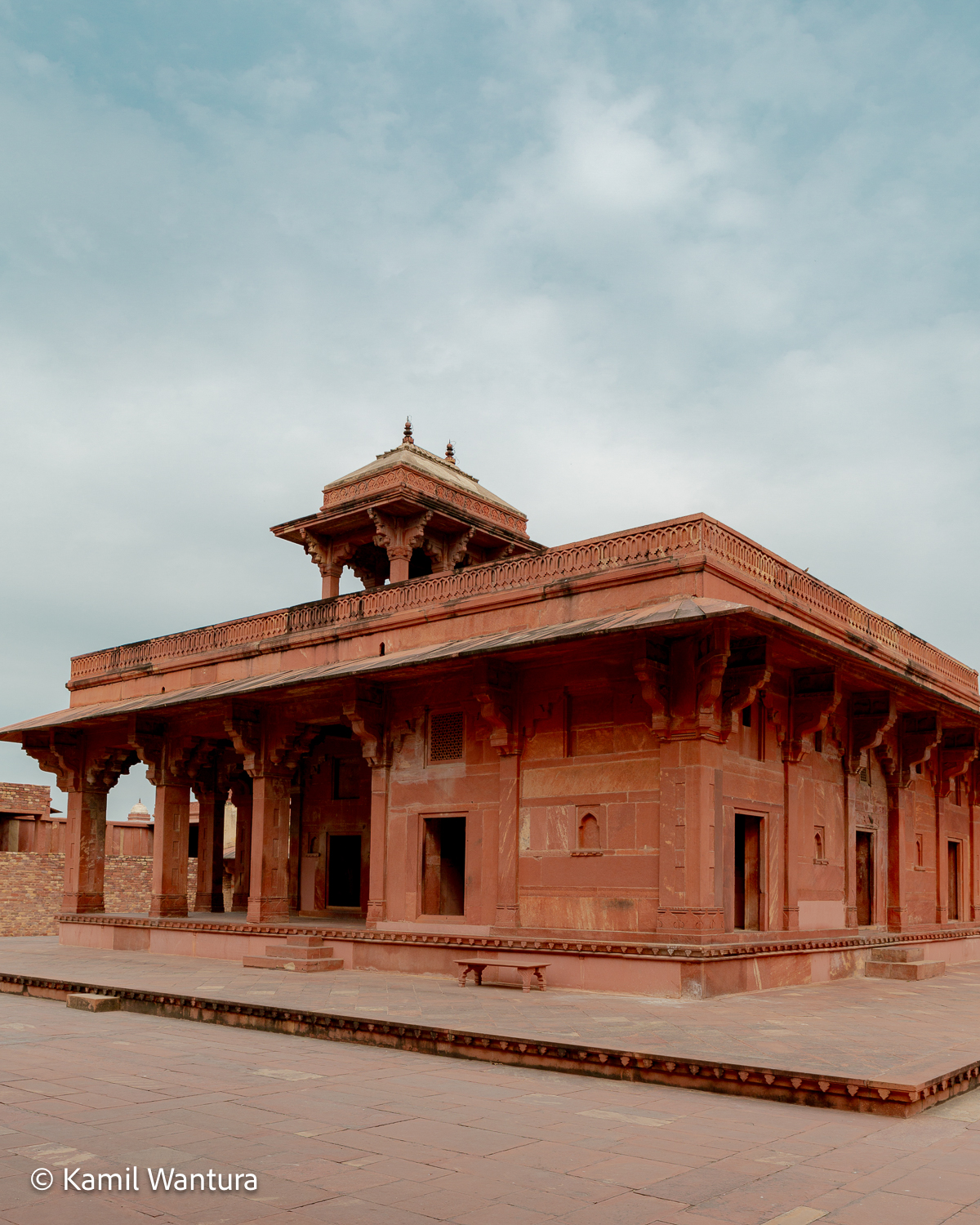
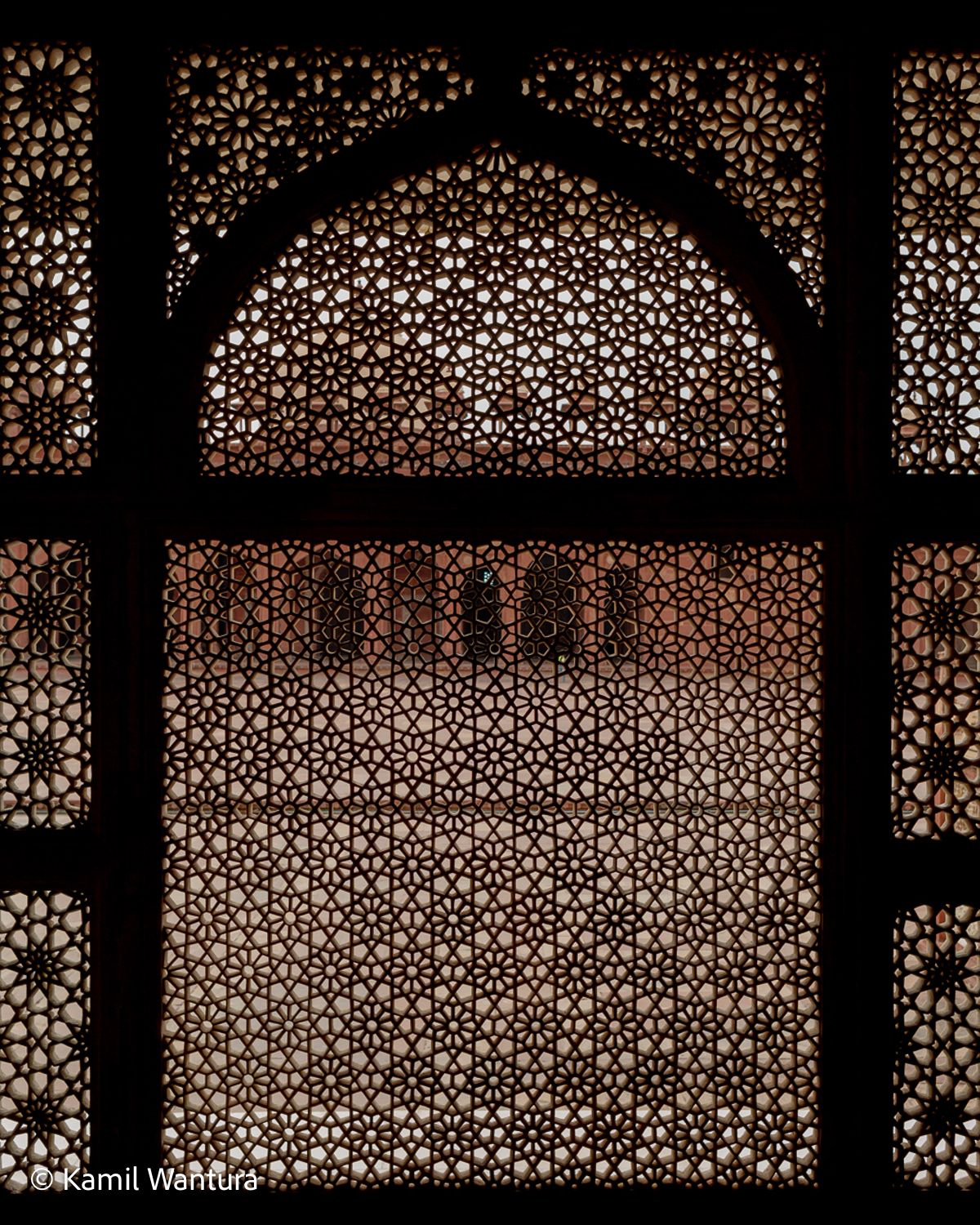
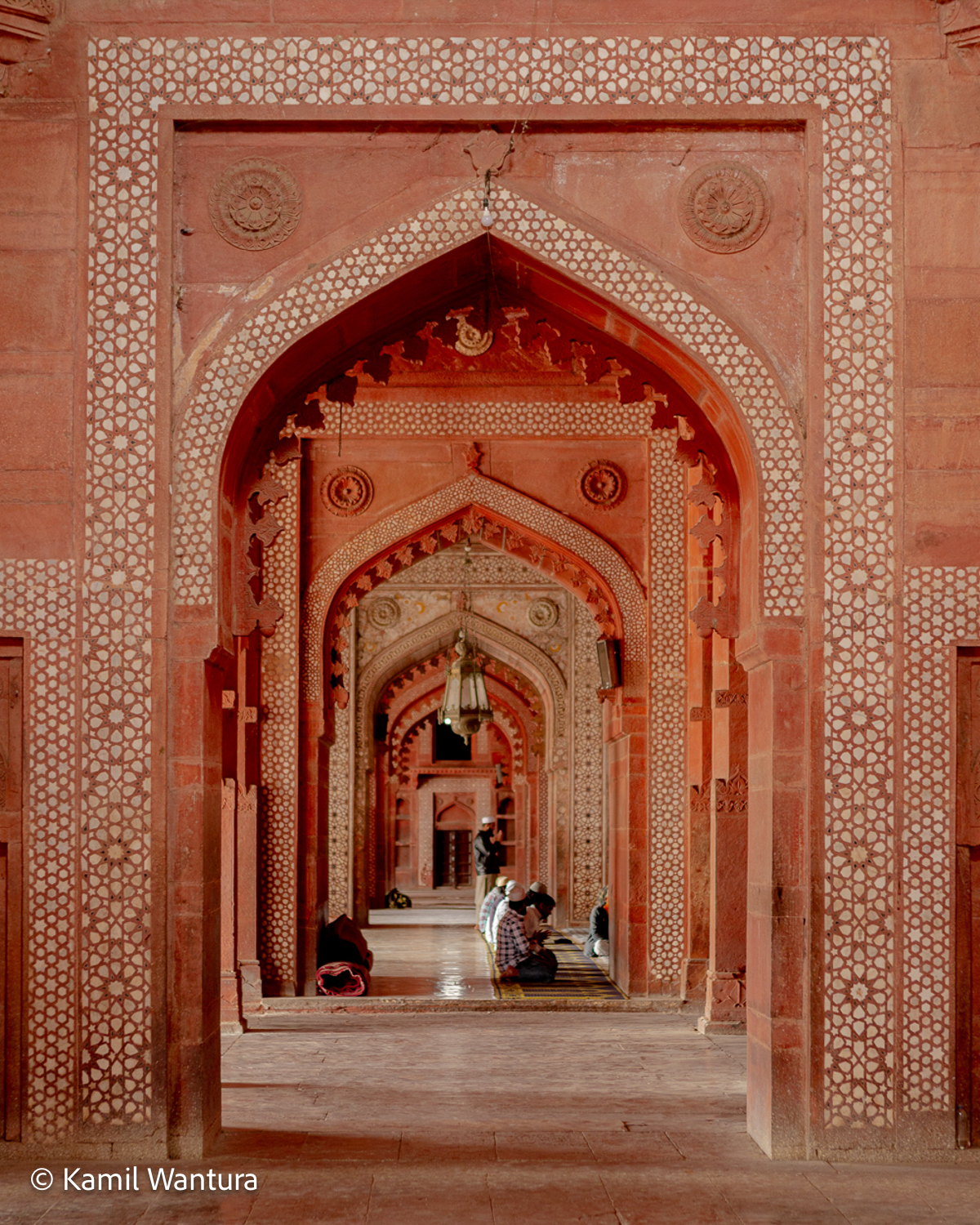
Fatehpur Sikri (📍MAP)
We explore this abandoned Mughal ghost city constructed entirely from deep red sandstone.
Day 5: The Masterpiece of Symmetry
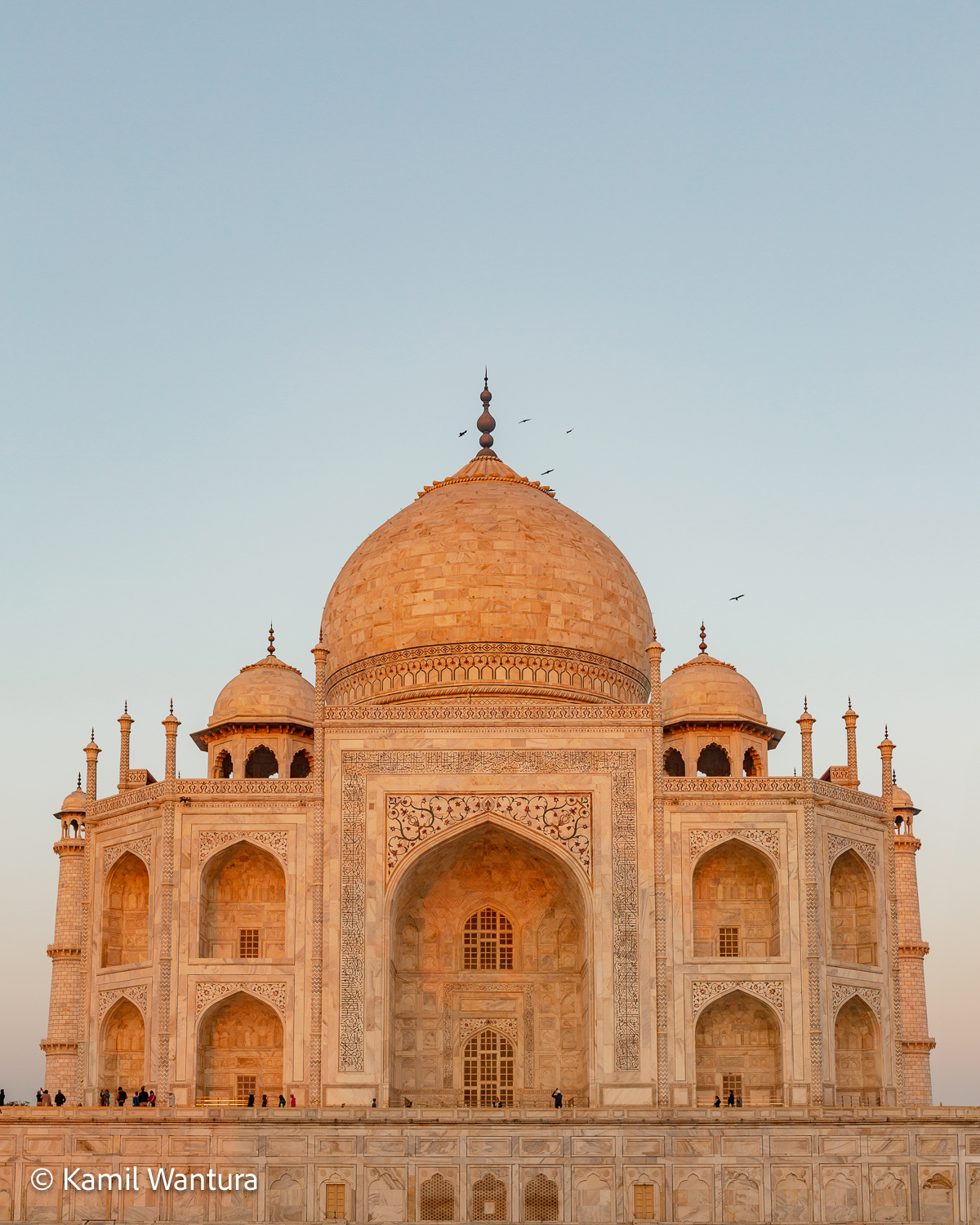
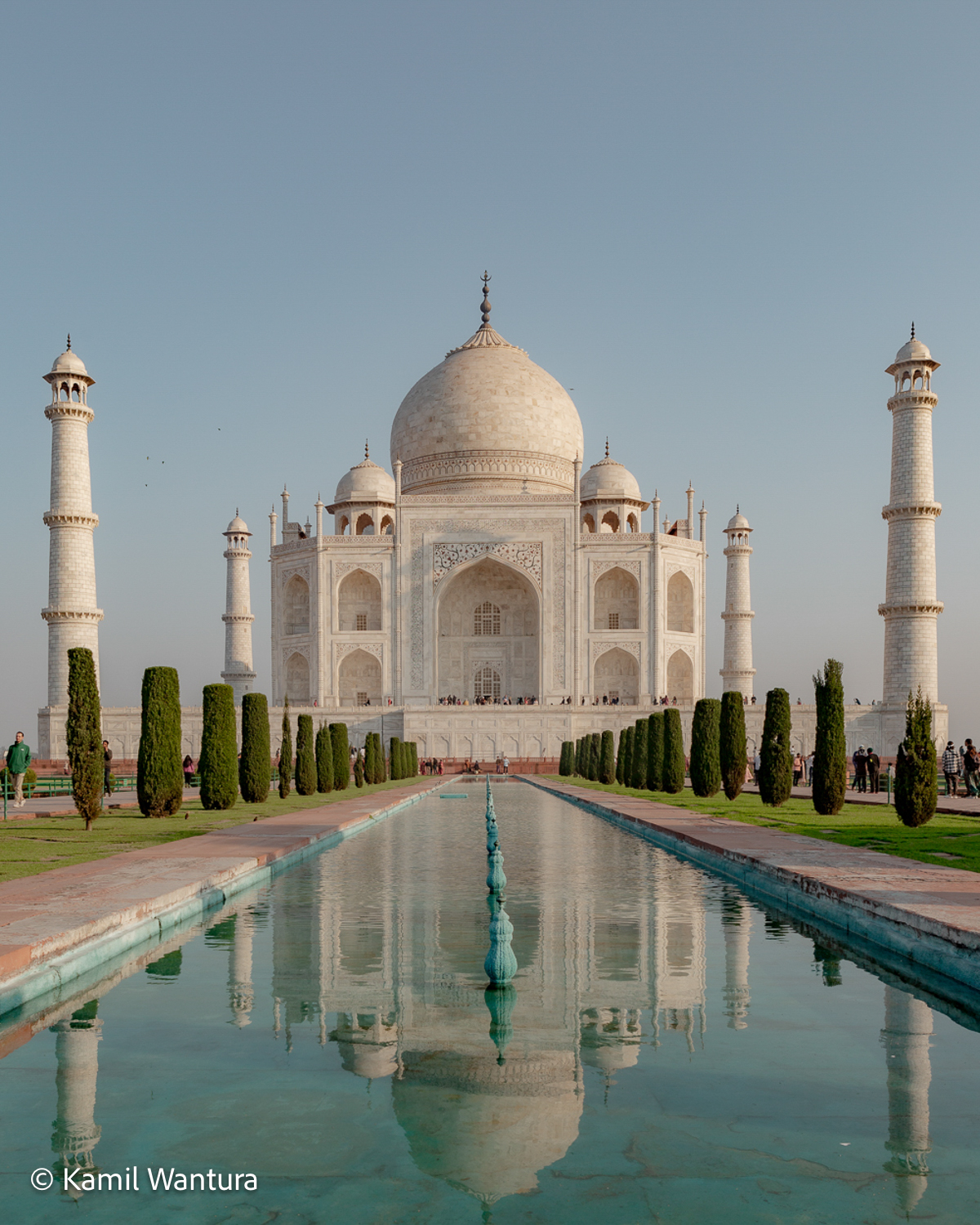
Taj Mahal (📍MAP)
We visit the iconic white-marble monument at first light, when the marble turns a soft pink-gold and crowds are thinnest.
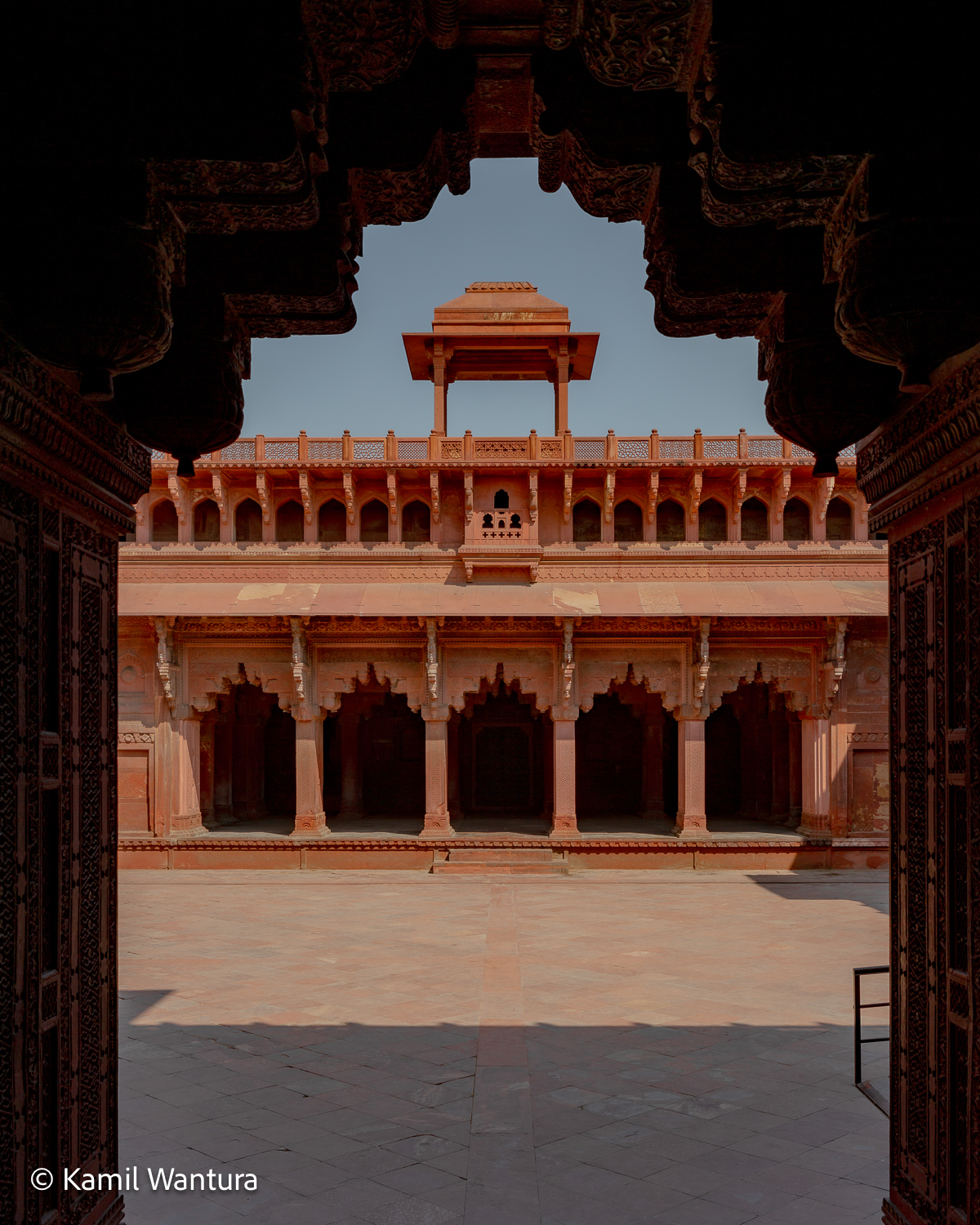
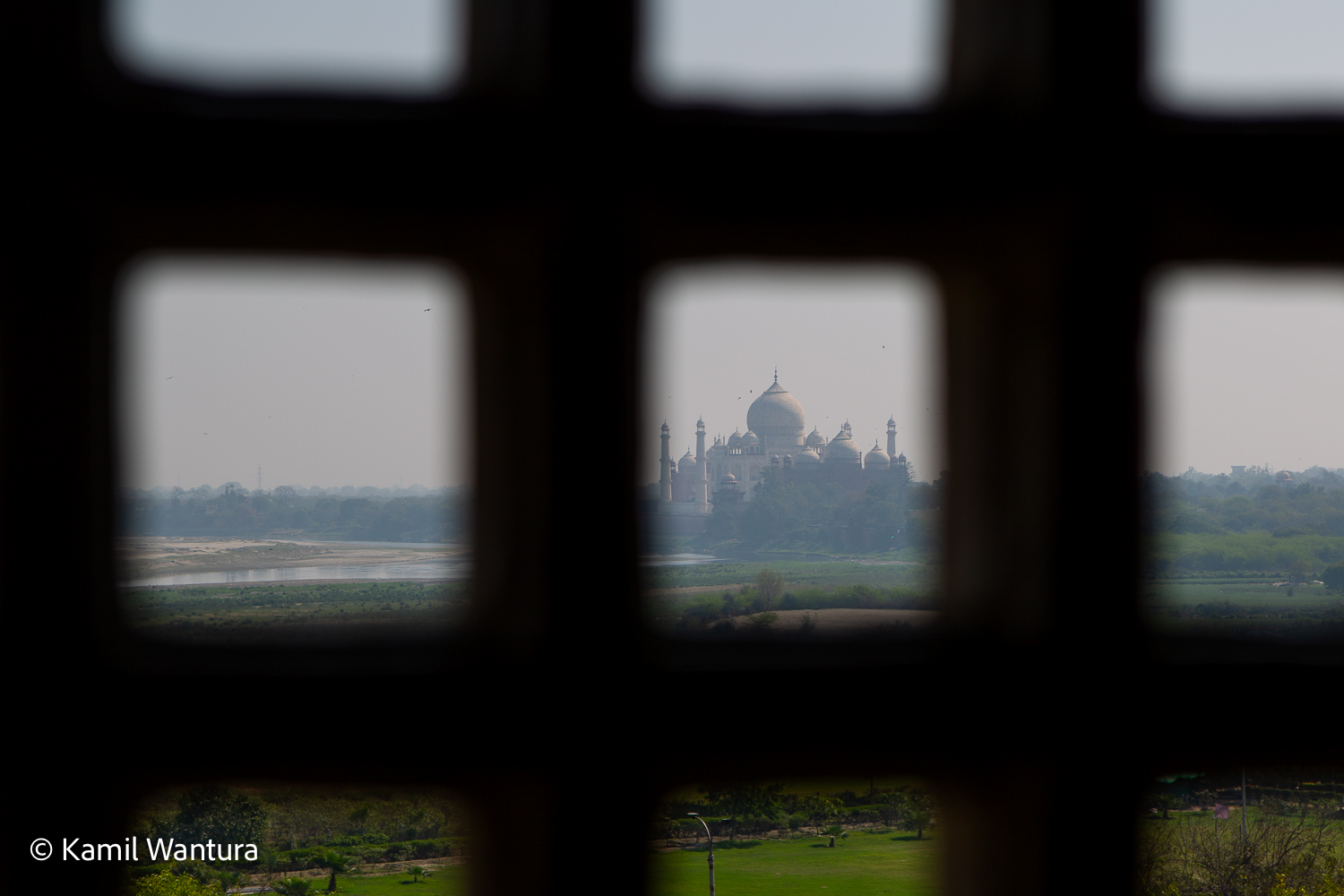
Agra Fort (📍MAP)
We explore this massive, crescent-shaped 16th-century fortress made of deep red sandstone that served as the main residence of the emperors of the Mughal Dynasty.

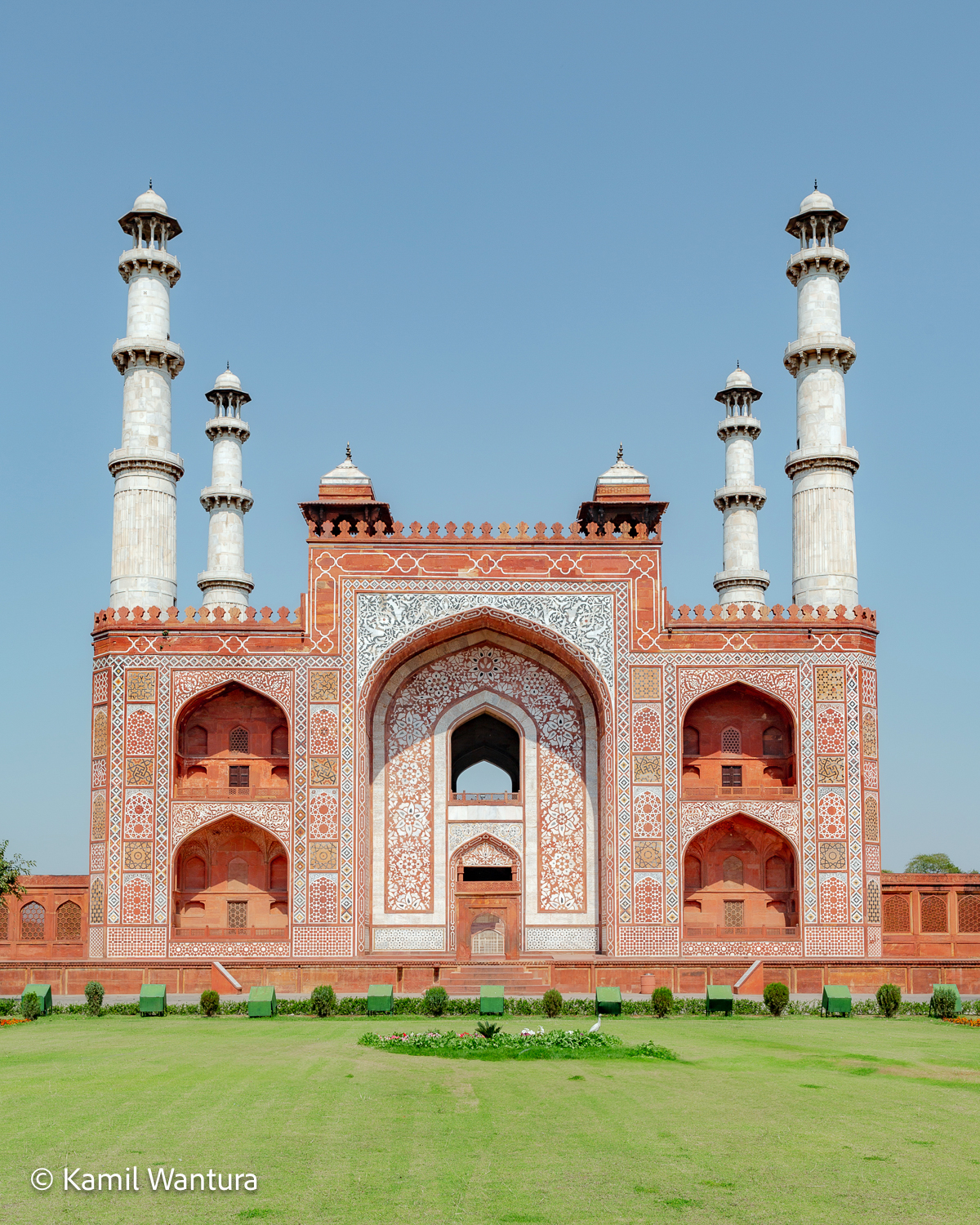
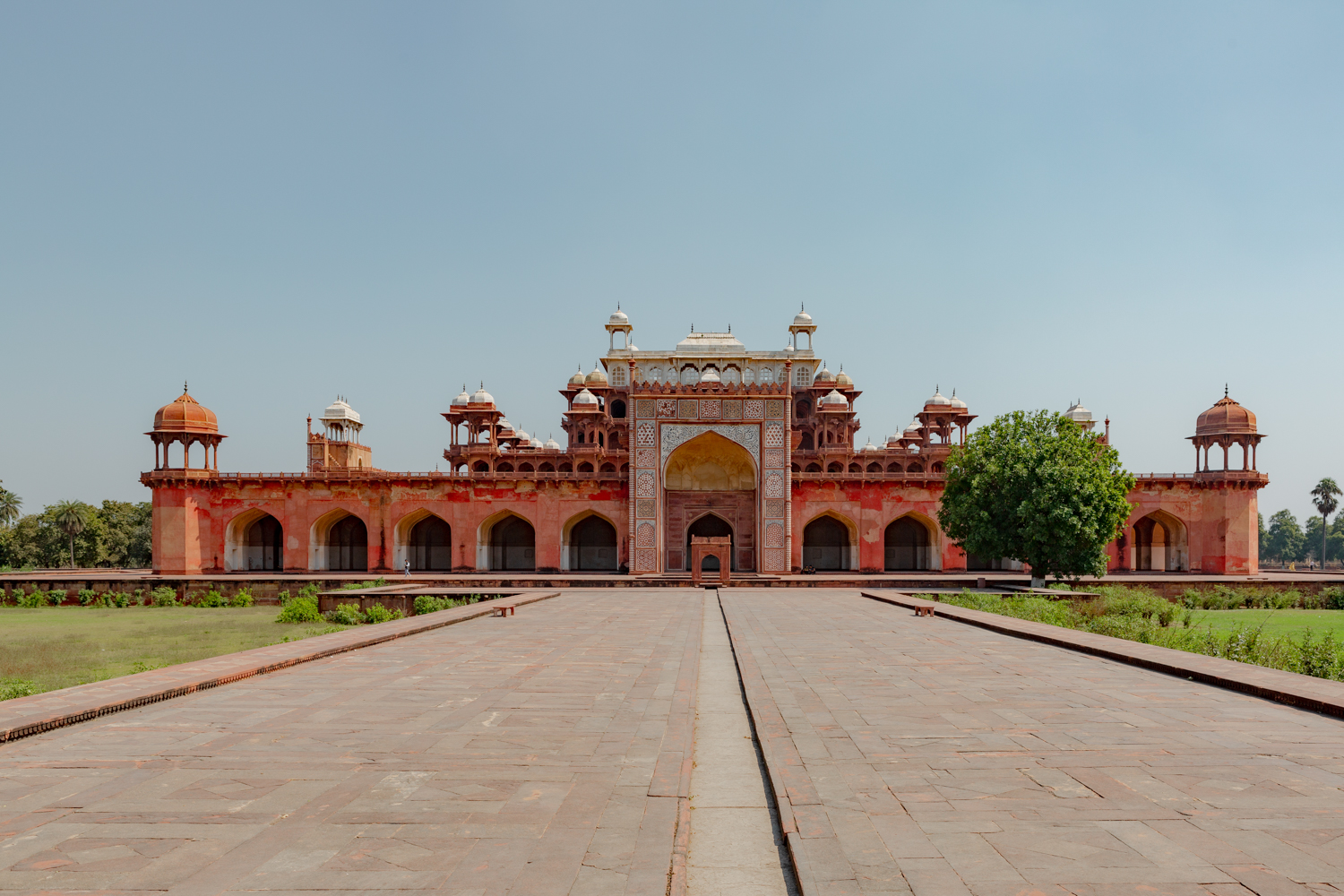
Tomb of Akbar (Sikandra) (📍MAP)
We visit this sprawling final resting place of Akbar the Great, featuring a monumental south gate flanked by four massive white marble minarets, surrounded by deep green lawns often populated by wild deer and monkeys.
Day 6: The Long Drive South & Hidden Symmetries
Orchha & The Royal Chhatris Orchha (📍MAP)
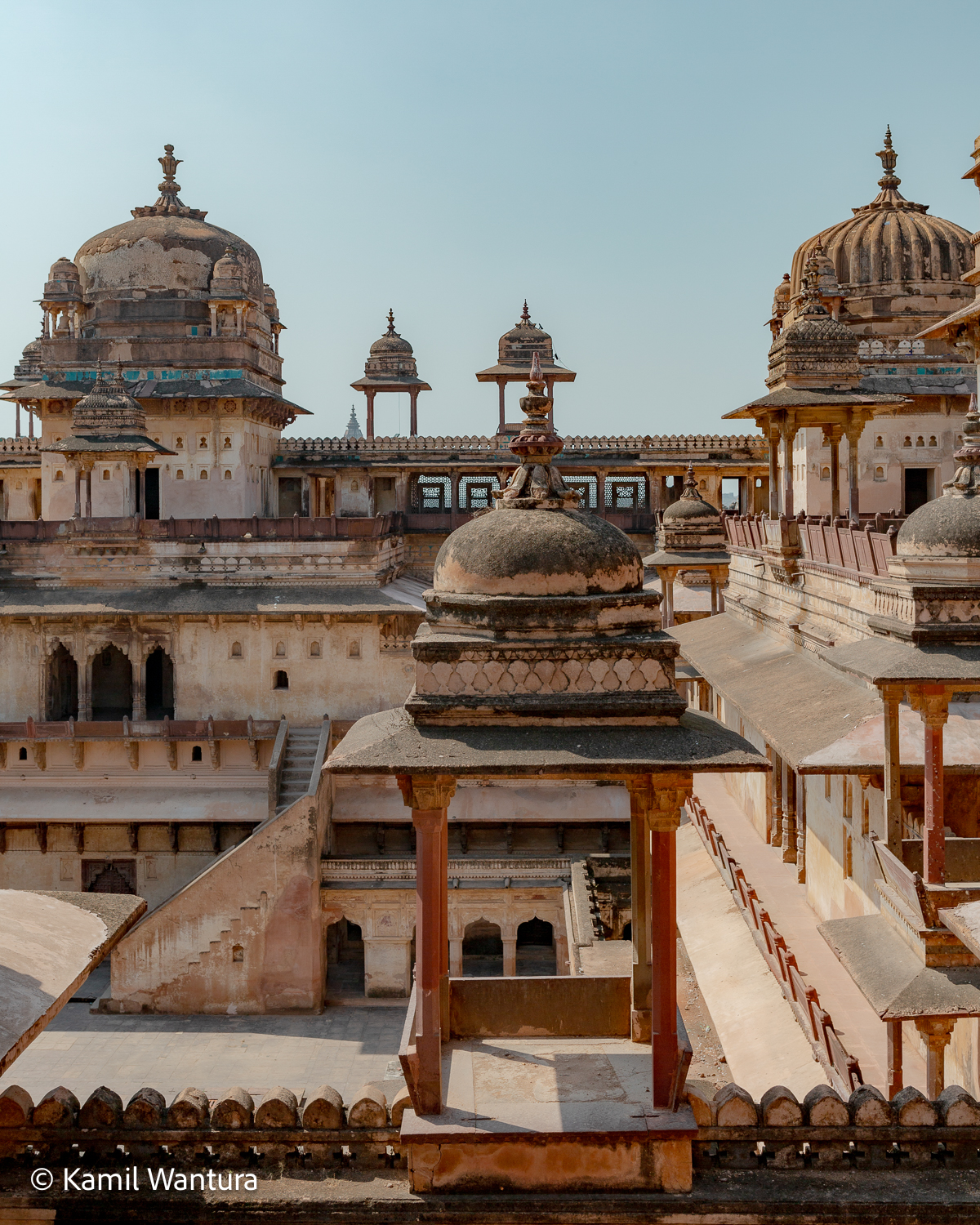
We arrive in the medieval town of Orchha around midday and discover a hidden architectural gem that sees a fraction of the crowds of Agra, offering completely unobstructed compositions.
The Fort Complex: We step inside the grand Jahangir Mahal (📍MAP). It is a masterpiece of Bundela architecture featuring multi-tiered courtyards, narrow open-air staircases, and dozens of symmetrical viewing domes. We frame our shots from the upper levels looking down into the main courtyard to emphasise the geometric precision.
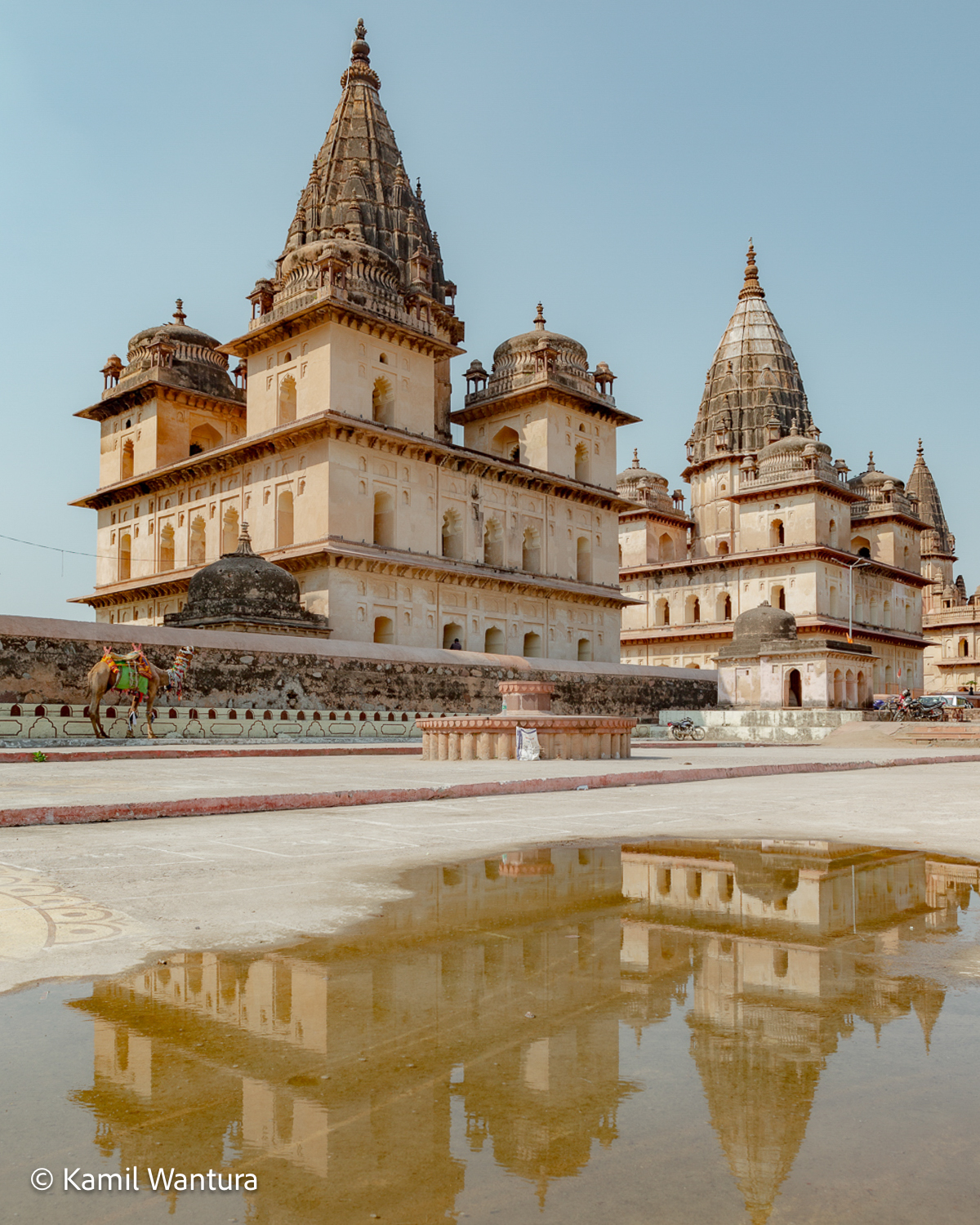
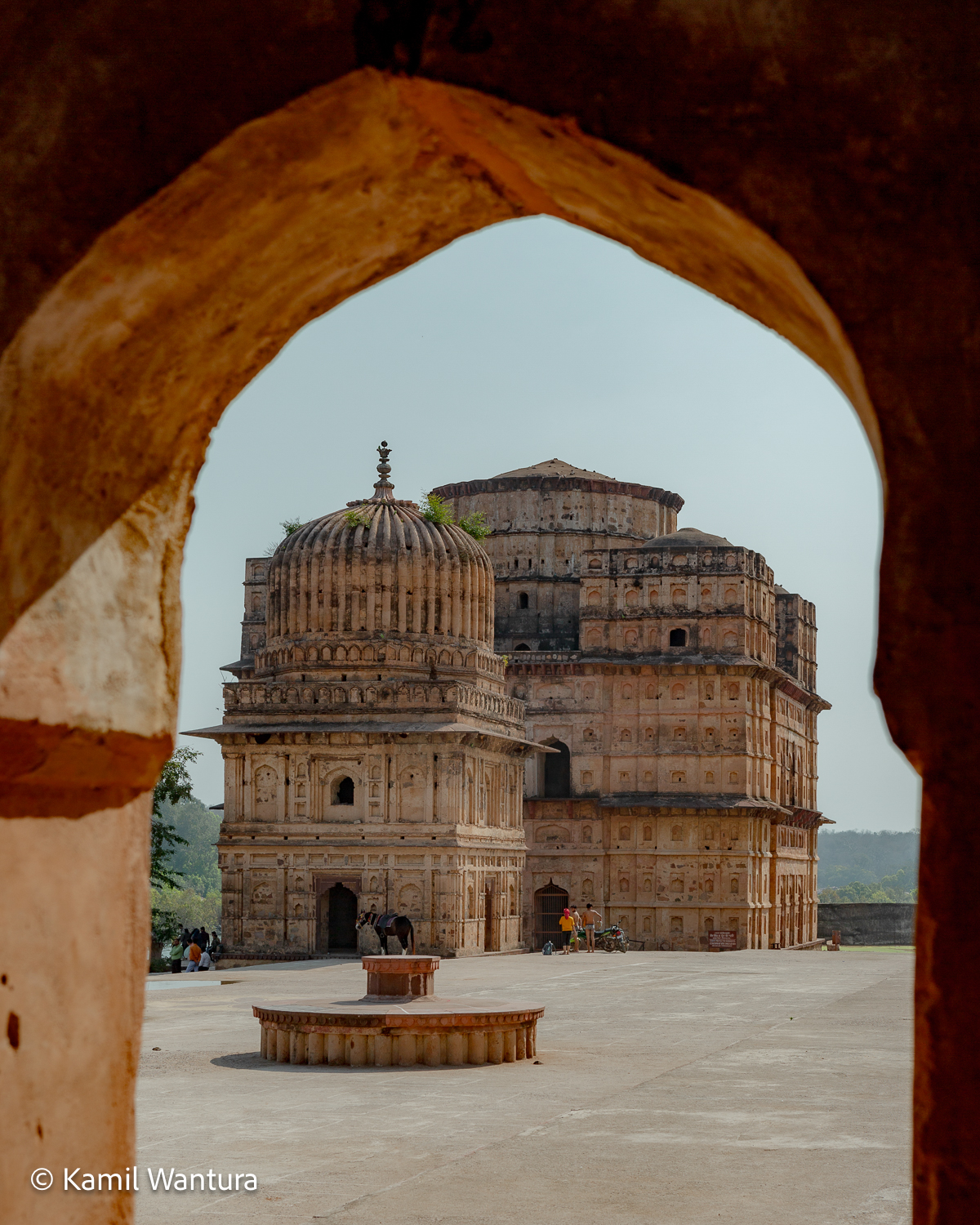
The Chhatris: We head down to the banks of the Betwa River (📍MAP) to capture the 14 grand stone cenotaphs of the Bundela rulers.
Arrival in Khajuraho
We arrive after a further 3.5 to 4 hours of driving past rural villages and changing rural landscapes.
Day 7: Deep Chiaroscuro & Seductive Stone
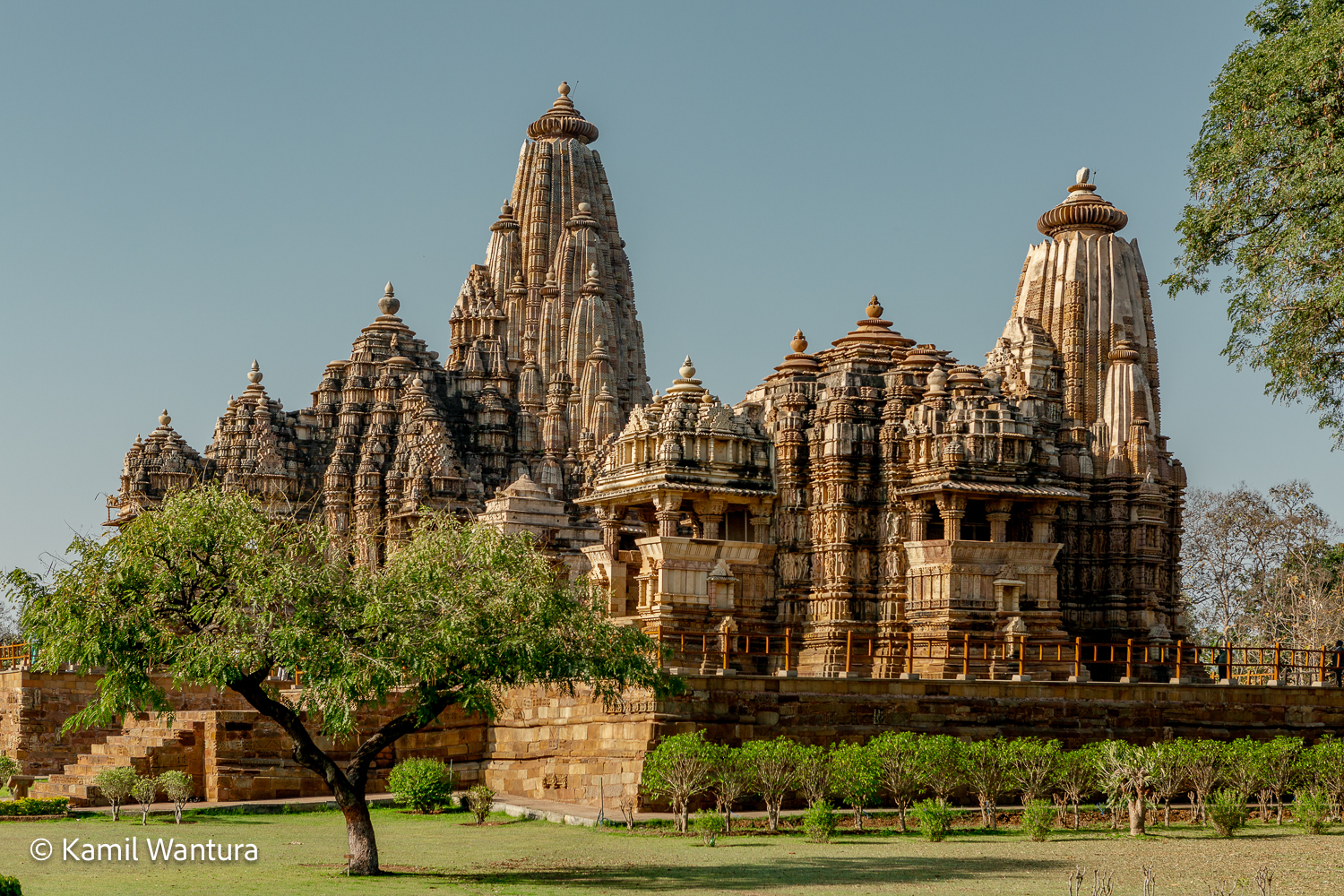
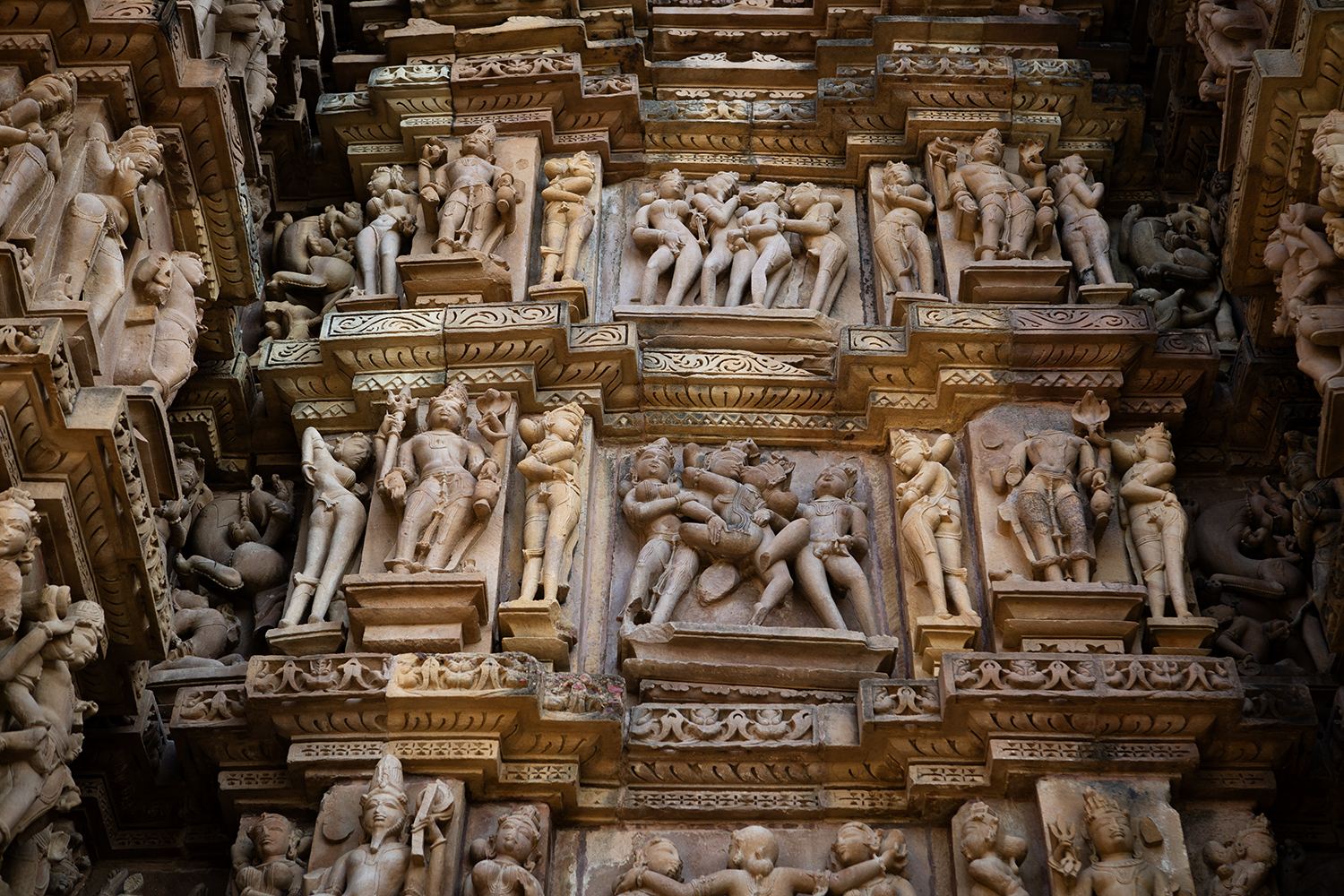
We explore the Chandela dynasty temples, world-renowned not just for their sensuous carvings, but for their masterful architectural silhouettes that resemble the peaks of the Himalayas.
Western Group of Temples
We visit the premium, UNESCO-protected site. Arriving exactly at sunrise guarantees golden light casting deep, dramatic shadows (chiaroscuro) into the hyper-detailed carvings. Key Structures: Focus on the towering Kandariya Mahadeva Temple and Lakshmana Temple.
Eastern & Southern Group of Temples
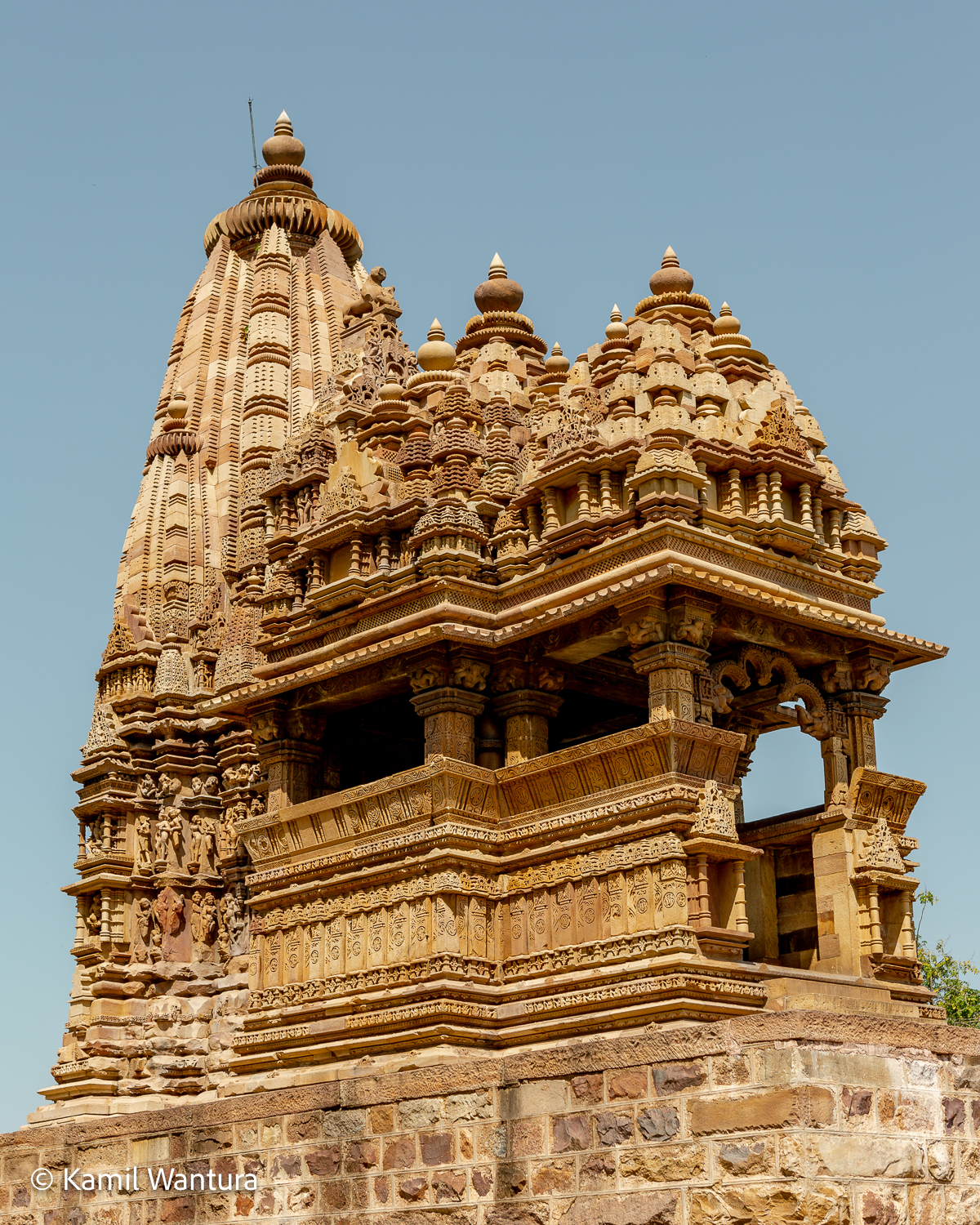
We explore a shorter, quieter cluster consisting of both Hindu and Jain shrines located closer to the old village. Key Structures: Parsvanath Temple (exquisite stone detailing) and Dulhadev Temple.
Day 8: Delhi & High-Speed Street Highlights
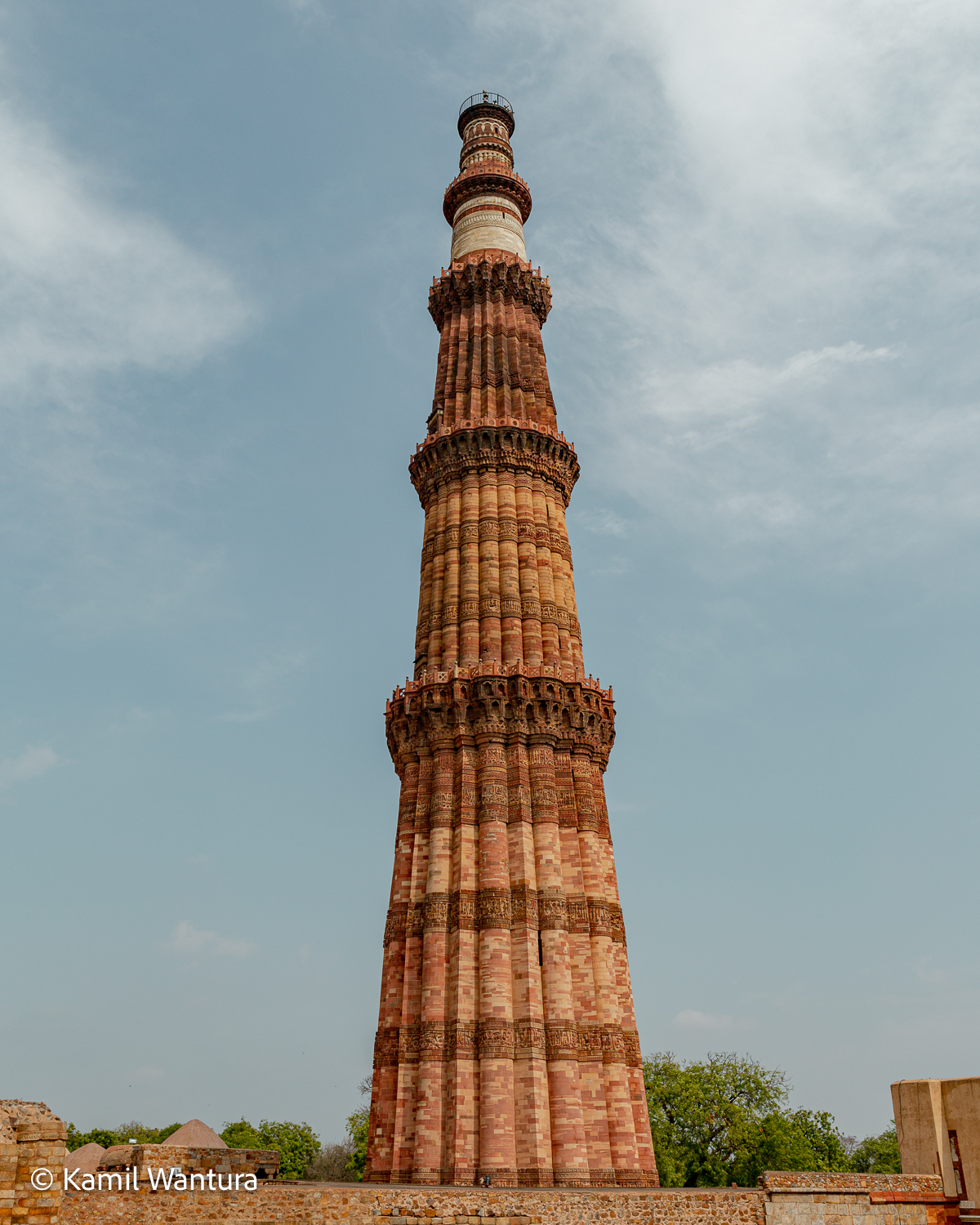
Qutb Minar
Upon landing at Delhi Airport, we head directly south to this iconic 73-metre brick minaret. Built in 1193, it features deep fluting, intricate corbelled balconies, and geometric calligraphic bands that catch harsh afternoon light beautifully, turning it into rich, high-contrast textures.
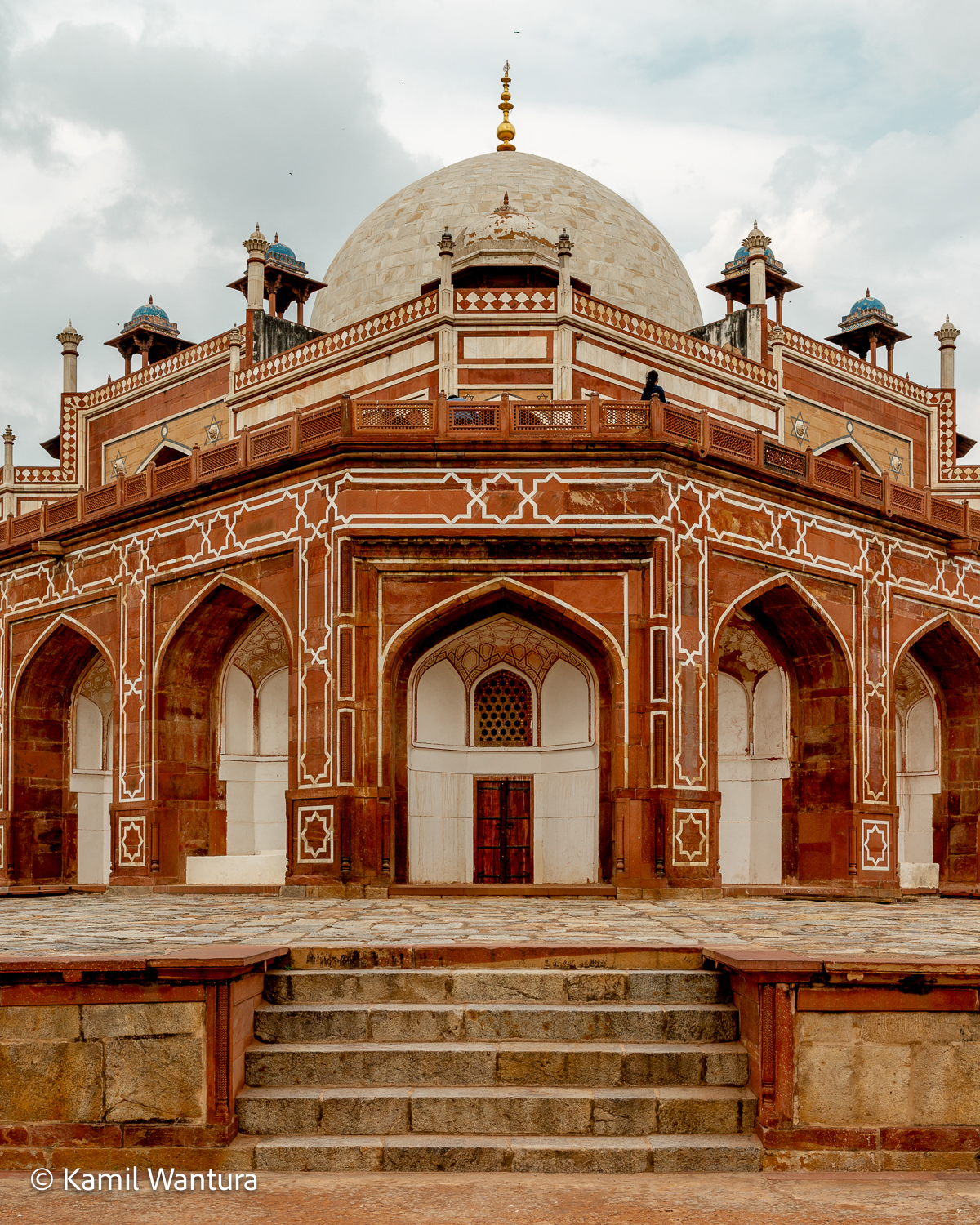
Humayun’s Tomb
We explore the magnificent precursor to the Taj Mahal, built with striking red sandstone and stark white marble trim, surrounded by symmetrical Persian-style Charbagh gardens.
THE GOLDEN TRIANGLE SURVIVAL & LOGISTICS GUIDE
Essential Ground Data for Travel & Photography Planning
Before packing camera bags and heading out, navigating India smoothly requires tactical preparation. The country’s infrastructure has modernised rapidly, meaning old travel guidebooks are often outdated. Below is the essential, practical information needed to turn a photography trip into a seamless journey.
1. Money, Payments, & Tipping
| Use Cash For | Use Cards For |
|---|---|
|
|
2. Transit Between Cities
Navigating the geographic distances between Delhi, Jaipur, and Agra requires advance coordination rather than spontaneous planning.
Renting Car with Private Driver: That is the best way to travel around India and it is highly recommended. It allows pulling over for spontaneous roadside photo opportunities, safely stores heavy gear during transitions, and costs roughly 4,000 to 6,000 rupees per day including fuel, parking, and state toll taxes. I used comapny called travelbureauindia and I was really happy with their service.
The Express Trains: For rail travel, stick exclusively to premium trains such as the Vande Bharat Express or Shatabdi Express connecting Delhi, Agra, and Jaipur. They are clean, air-conditioned, and include meals. Tickets should be booked weeks in advance via platforms like 12Go, IRCTC, or MakeMyTrip, as they frequently sell out.
Intra-City Commuting: Utilise mobile applications like Uber or Ola. Relying on these apps for auto-rickshaws and cars completely eliminates aggressive price haggling on the street and ensures the route is GPS-tracked.
3. Mobile Internet Setup
Having reliable mobile data is mandatory for booking rides, translating signs, and verifying monument opening hours dynamically.
The most frictionless route is purchasing an eSIM (such as Airalo) prior to arrival. Download Airalo app. Get GBP £2.50 off your first eSIM purchase with Airalo. Use code KAMIL9100 when you sign up or at checkout. https://airalo.go.link/6HJXX
If the smartphone is not eSIM compatible, purchase a physical Airtel or Jio SIM card directly at the Delhi Airport arrivals hall. This requires a physical passport, a visa copy, and a passport-sized photograph. Activation typically requires 2 to 4 hours.
4. Monument Rules & Cultural Etiquette
Photographing historic and sacred spaces in India requires a blend of digital strategy and cultural respect.
Skip the Ticket Lines
Avoid buying physical entry tickets at the gate. Use the official Archaeological Survey of India (ASI) portal online to purchase entry vouchers. This bypasses massive sunrise ticket queues at locations like the Taj Mahal or Amber Fort.
Gear Restrictions
Major ASI monuments explicitly ban tripods, gimbals, and external microphones unless a highly expensive, pre-approved commercial permit is secured. Keep the camera setup strictly handheld. Furthermore, inside active temple sanctuaries and the main dome of the Taj Mahal, photography is strictly prohibited.
Temple Protocol & Wildlife Safety
Always remove footwear before entering holy enclosures. Wear clothing that covers shoulders and knees completely. Carrying a lightweight scarf in a camera bag is useful for quick head-coverings when required. At locations like the Monkey Temple (Shri Galta Peeth), keep camera straps firmly wrapped around the wrist. Avoid direct eye contact with macaques and langurs, and never rustle plastic bags, which they associate with food.
Quick-Reference Travel Checklist
| Category | Action Item & Protocol |
|---|---|
| Water Safety | Never drink tap water. Use sealed bottled water even for brushing teeth, and avoid raw ice at street stalls. |
| Transit App | Download and configure Uber and Ola before leaving the arrival airport. |
| Booking Window | Secure Taj Mahal entry passes and premium train tickets 2 to 4 weeks in advance. |
| Camera Bags | Utilise a discreet, theft-resistant backpack fitted with a rain and dust cover. |
