
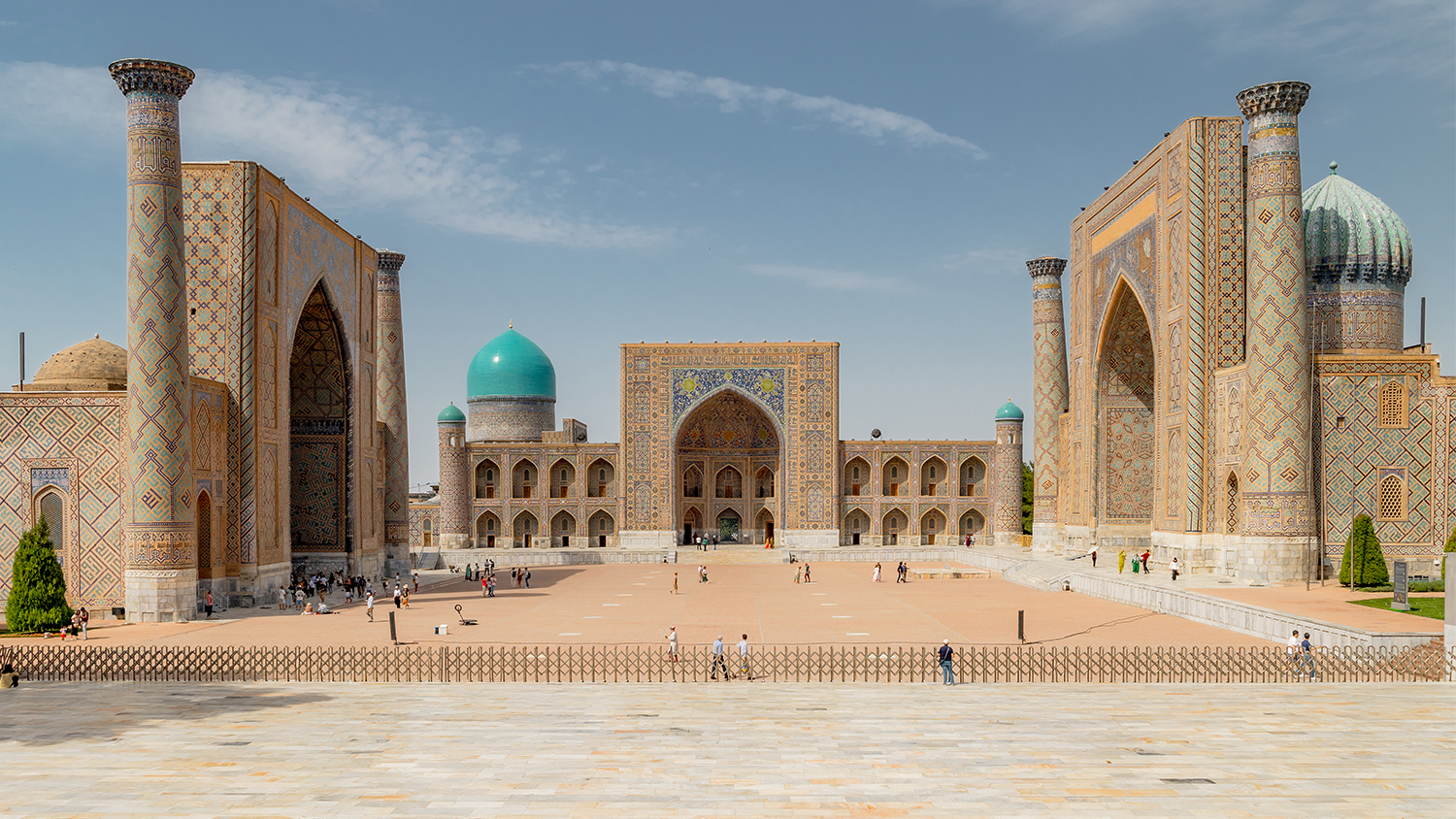

Uzbekistan feels like somewhere from another world, with endless desert, ancient clay fortresses and some of the most beautiful blue tilework I have ever seen. As someone who loves photography, it is the kind of place where you constantly find yourself stopping to take another photo. The colours, textures and layers of history make almost every scene feel a little unreal. Walking through its historic cities feels like stepping into a living museum, but somehow it never feels frozen in the past. You can wander through centuries old bazaars, surrounded by the smell of spices and the sounds of local artisans, and then turn a corner to find a huge minaret rising against a brilliant blue sky. What stayed with me most, though, was not just the scale of the monuments. It was the little things, like the detail in a hand carved wooden door, the patterns in the tiles, a quiet street, or the warmth of the people you meet along the way. Uzbekistan has a way of making you slow down, look around and appreciate a completely different pace of life. For me, that is what makes it so unforgettable.
TRAVEL & PHOTO CONDITIONS
| Time | September 2025 |
|---|---|
| Weather | Dry | Sunny ☀ |
| Temperature | 22 to 30 °C |
| Photo Potential | |
| Physical Difficulty | |
| Accessibility | |
| Crowd Level | |
| Value for Money |
TRIP ESSENTIAL BOOKINGS
HIGH SPEED TRAINS
CITY TAXIS
ENTRANCE VISA
TOURS & GUIDES | FROM KHIVA
THE 10-DAY PHOTOGRAPHY ITINERARY
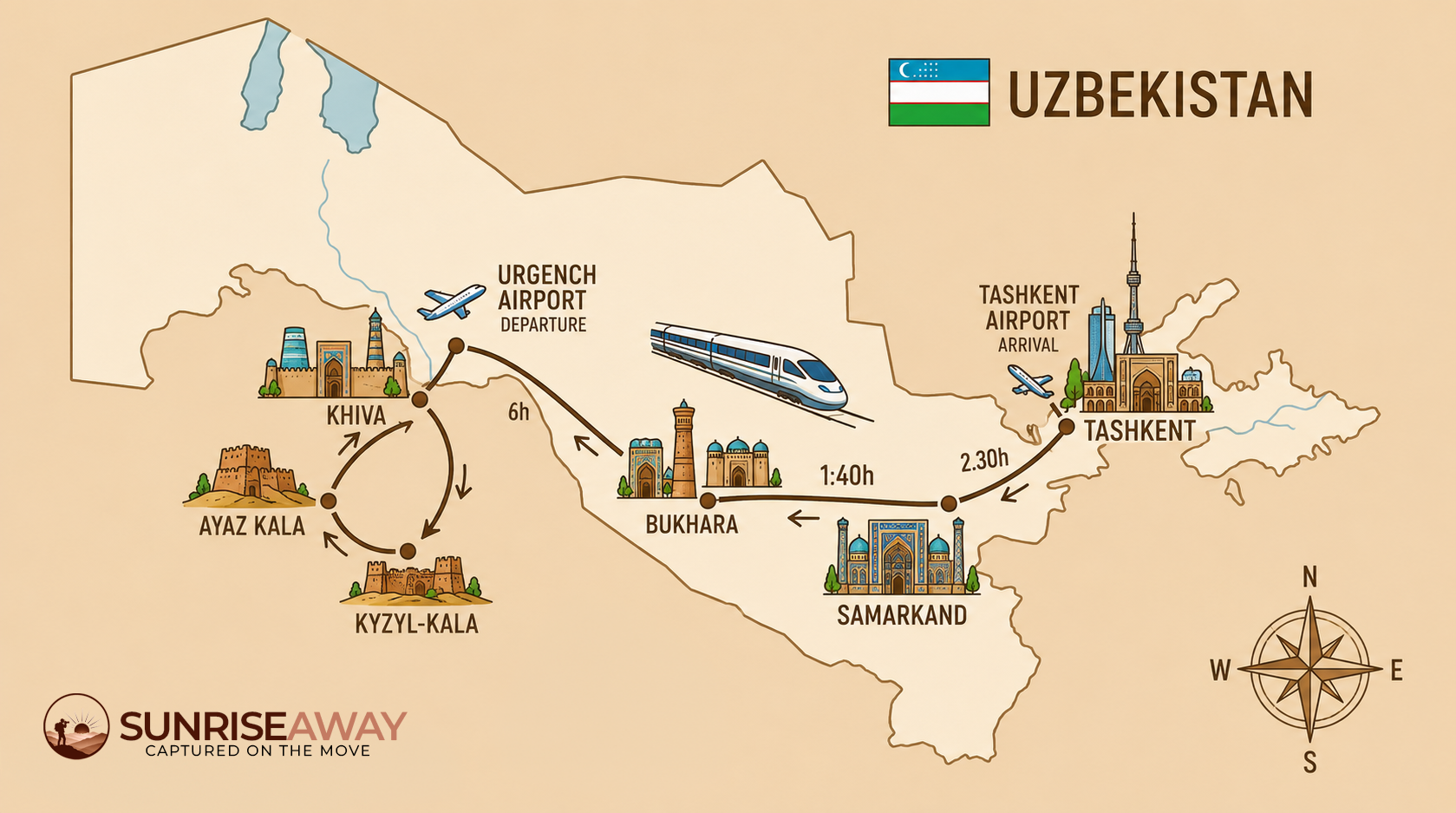
I spent around ten days travelling through Uzbekistan by train with friends, visiting some of the country’s most incredible historic cities, including Khiva, Bukhara and Samarkand. It was a trip that felt adventurous without ever being stressful, and travelling by train made it really easy to slow down and enjoy the journey between each place. I visited in September and was lucky with the weather. The days were warm, bright and sunny, but not unbearably hot, which made it perfect for exploring on foot. I loved wandering through the old streets, taking photos of the incredible architecture and stopping for long lunches or a coffee whenever we felt like it. The warm evening light was especially beautiful, with the blue tiles, golden domes and ancient minarets looking almost unreal. Khiva was probably the place that felt most like stepping into another world, with its narrow streets, huge walls and beautiful blue tilework. Bukhara felt quieter and more relaxed, with its traditional markets, courtyards and little streets to explore. Samarkand was completely different again, with its enormous monuments and spectacular mosaics. Although I was travelling with friends, I also really enjoyed having moments to myself. There was something very relaxing about wandering around at my own pace, taking photos, sitting in the sunshine or simply watching everyday life go by. At the same time, sharing the experience with friends made it even more memorable, from the long train journeys to discovering new places and enjoying meals together. For me, the best thing about the trip was the balance between exploring and relaxing. Ten days felt like the perfect amount of time to see a lot without feeling rushed. Uzbekistan gave me incredible architecture, fascinating history, beautiful weather and a completely different pace of life, while travelling with friends made the whole experience even more special.
- Day 1: Arrival & Twilight Tones
- Day 2: Subterranean Palaces & Grand Architecture
- Day 3: Registan Square & Majestic Mausoleums
- Day 4: Bazaars, Ancient Observatories & Artisans
- Day 5: Trading Domes & Historic Pools
- Day 6: Fortresses, Minarets & Caravanserais
- Day 7: Into the Kyzylkum Desert & Khiva Arrival
- Day 8: Itchan Kala & Minarets at Sunset
- Day 9: Palaces, Woodcarving & City Walls
- Day 10: Departure from Urgench
Days 1 to 2: Tashkent, The Modern Gateway
Day 1: Arrival & Twilight Tones
Central Area Stay 📍 MAP
I enjoyed a relaxing stay in the central area, recovering from the flight and exploring nearby avenues. Tashkent offers a fascinating mix of Soviet brutalism and modern Islamic architecture, with wide tree lined streets that were entirely rebuilt following the devastating 1966 earthquake.
Day 2: Subterranean Palaces & Grand Architecture
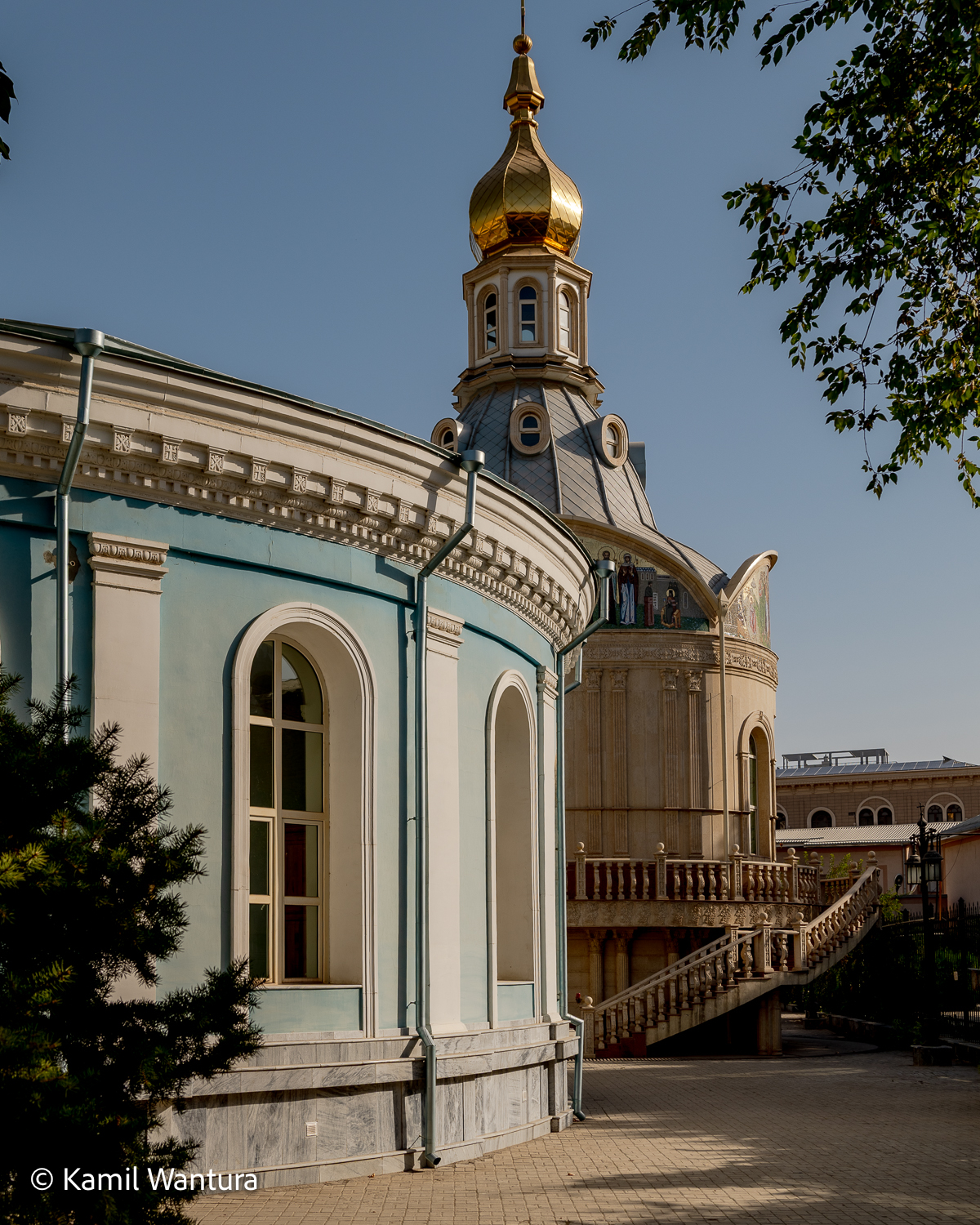
Holy Assumption Cathedral Church 📍 MAP
I explored the striking brilliant blue Russian Orthodox cathedral, marvelling at the contrast against the golden domes. Built in the late 19th century, it serves as the spiritual centre for the Russian Orthodox diocese in Uzbekistan and stands as a beautiful symbol of the diverse religious history of the region.
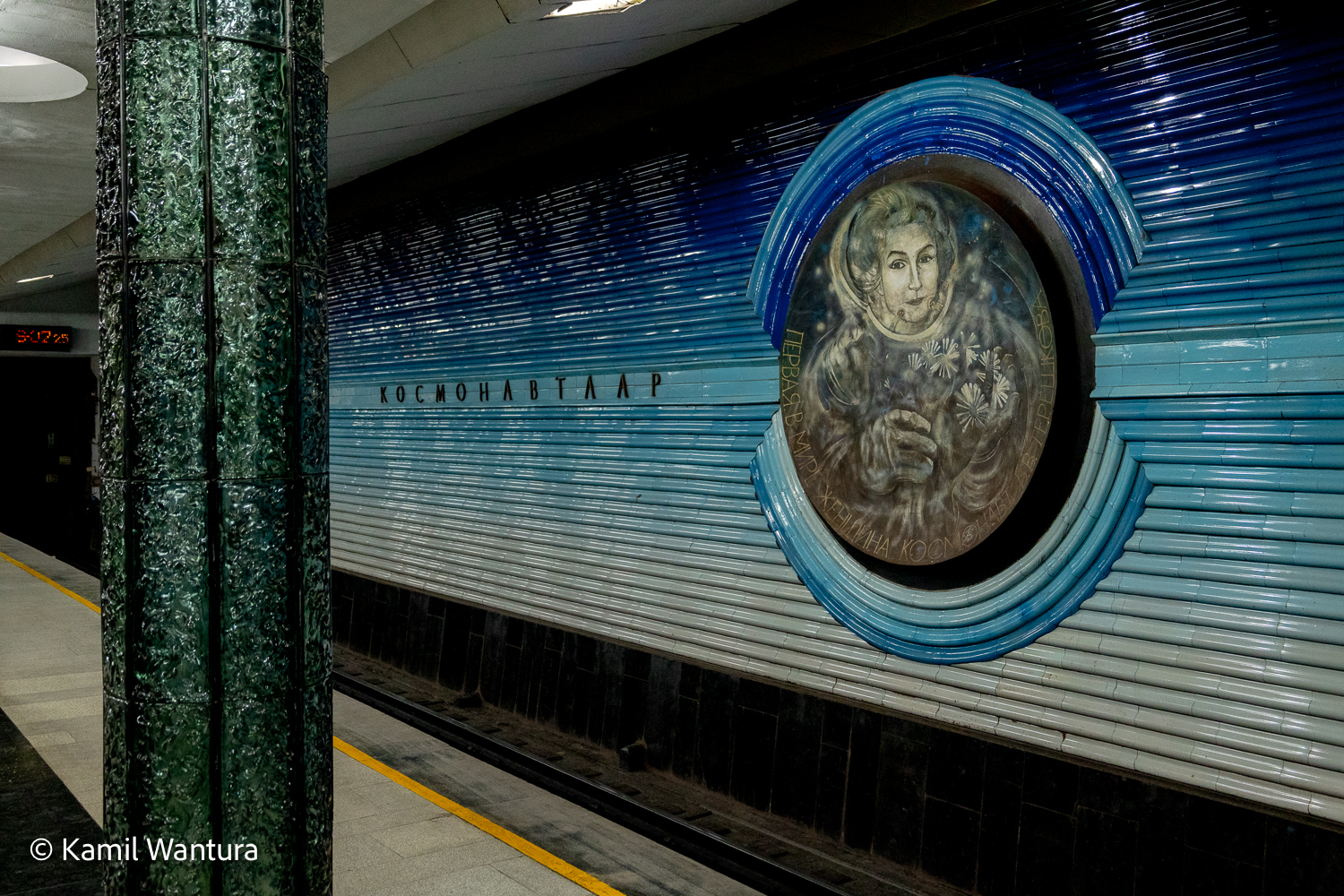
Tashkent Metro Stations 📍 MAP
I embarked on a metro ride, discovering the amazing architecture and subterranean artwork of the platforms. Originally constructed during the Soviet era to double as a nuclear bunker, every station features a completely unique design theme, celebrating everything from space exploration to famous Uzbek poets through intricate mosaics, marble, and ornate chandeliers.
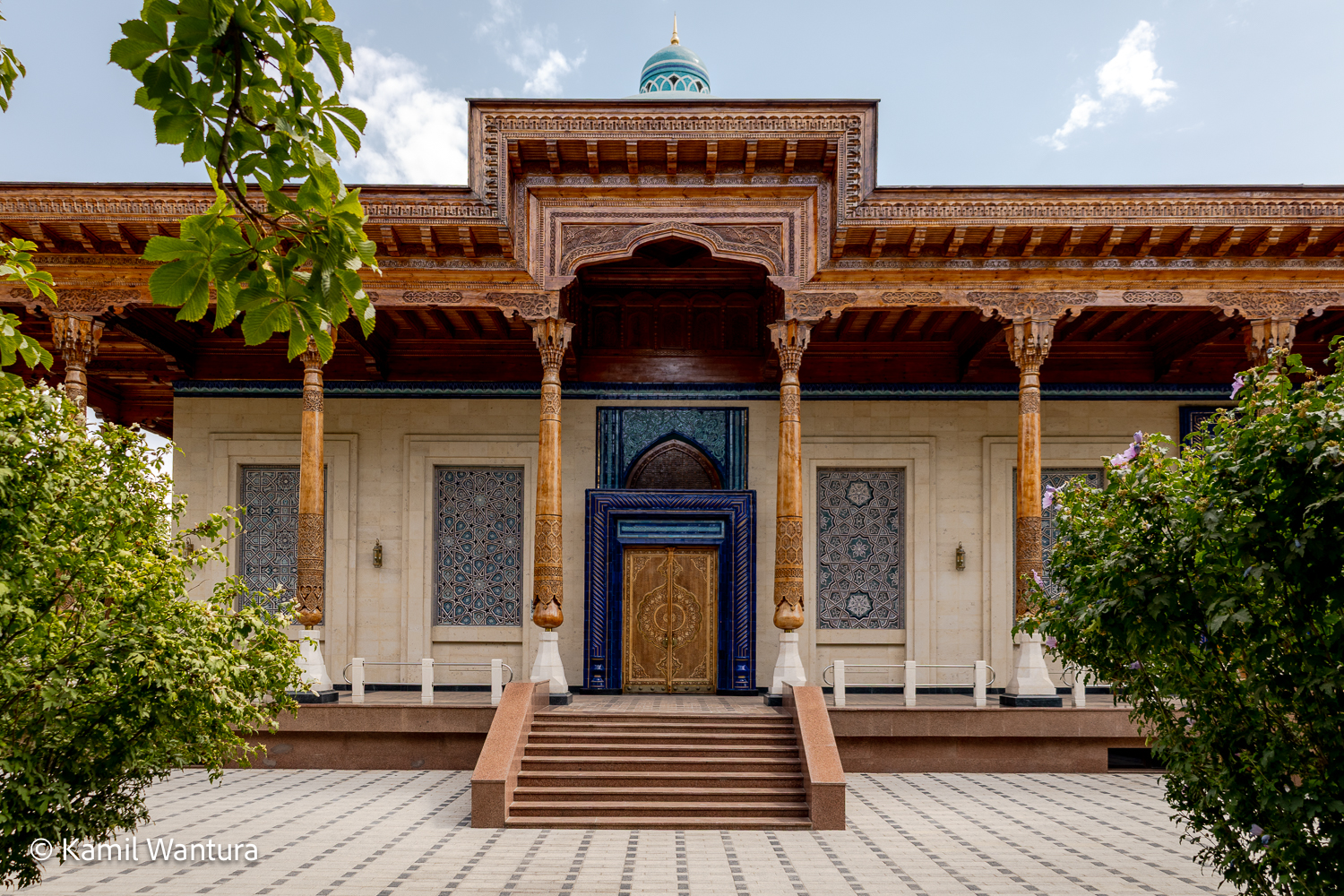
Museum of Victims of Political Repression 📍 MAP
I visited the museum grounds to document the poignant exhibits and the clean lines of the commemorative architecture. Situated beside the towering TV Tower, this peaceful park and museum complex pays a solemn tribute to the thousands of Uzbeks who were killed or exiled during Stalinist purges, offering a quiet space for reflection.
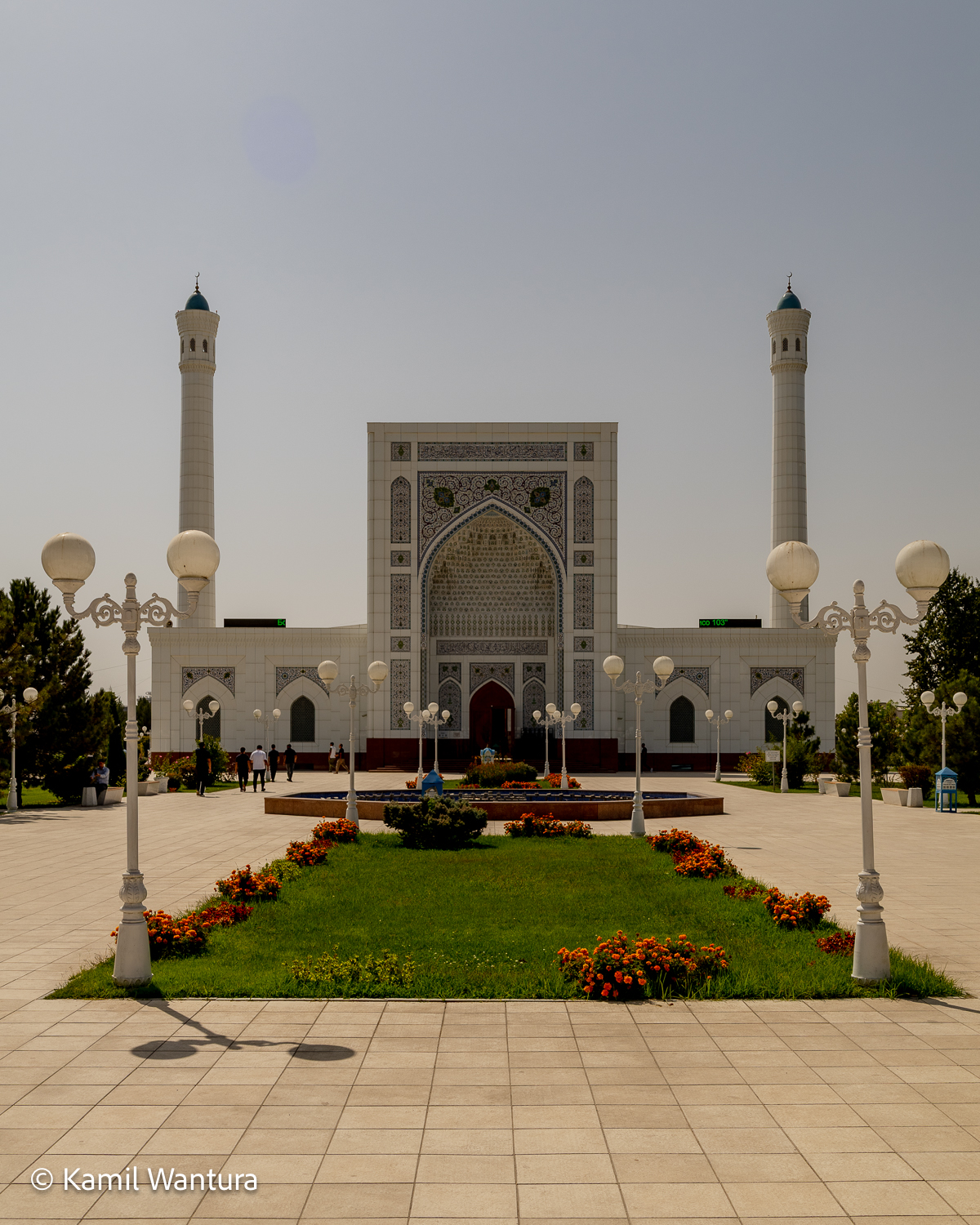
Minor Mosque 📍 MAP
I explored the stunning modern structure, famed for its brilliant white surfaces and quiet courtyard. Opened recently in 2014, it stands in stark contrast to the ancient brick mosques found elsewhere in the country, showcasing modern Islamic architectural brilliance with a breathtakingly ornate inner mihrab.
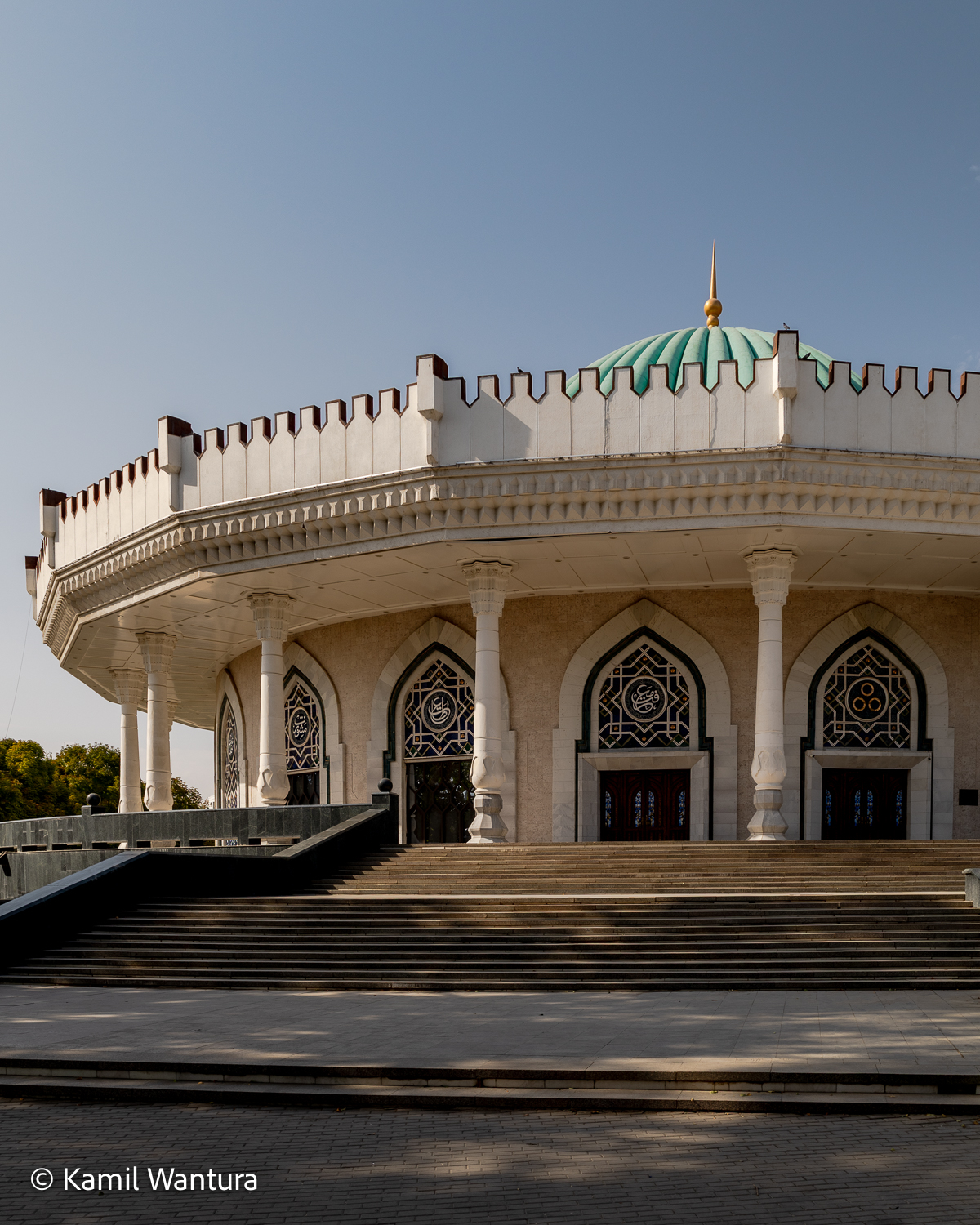
State Museum of the Temurids 📍 MAP
I captured the distinctive round, blue domed exterior of the museum showcasing the history of the Timurid dynasty. Inside, the exhibits celebrate Amir Timur and his descendants, housing ancient manuscripts, historical weapons, and coins that tell the story of a formidable medieval empire that once spanned across Central Asia.
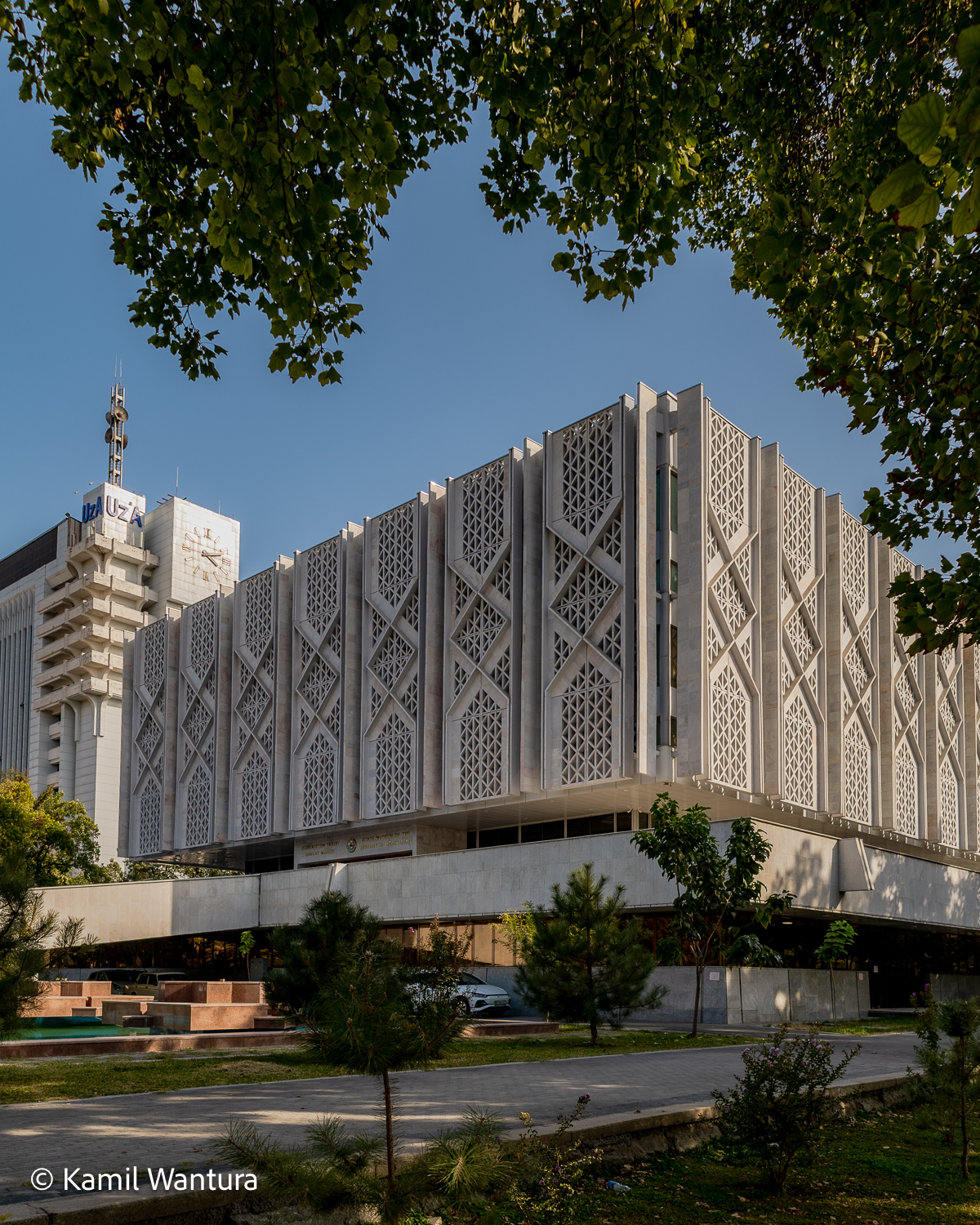
State Museum of the History of Uzbekistan 📍 MAP
I photographed the bold, blocky brutalist patterns framing the exterior of this comprehensive national history archive. Formerly known as the Lenin Museum, it now holds thousands of artefacts dating back to the Stone Age, including incredibly rare ancient Buddhist relics and Zoroastrian items discovered along the Silk Road.
Days 3 to 4: Samarkand, The Silk Road Heart
I spent these days photographing majestic blue domes, monumental squares, and shimmering evening light festivals.
Day 3: Monumental Scales & Shifting Shadows
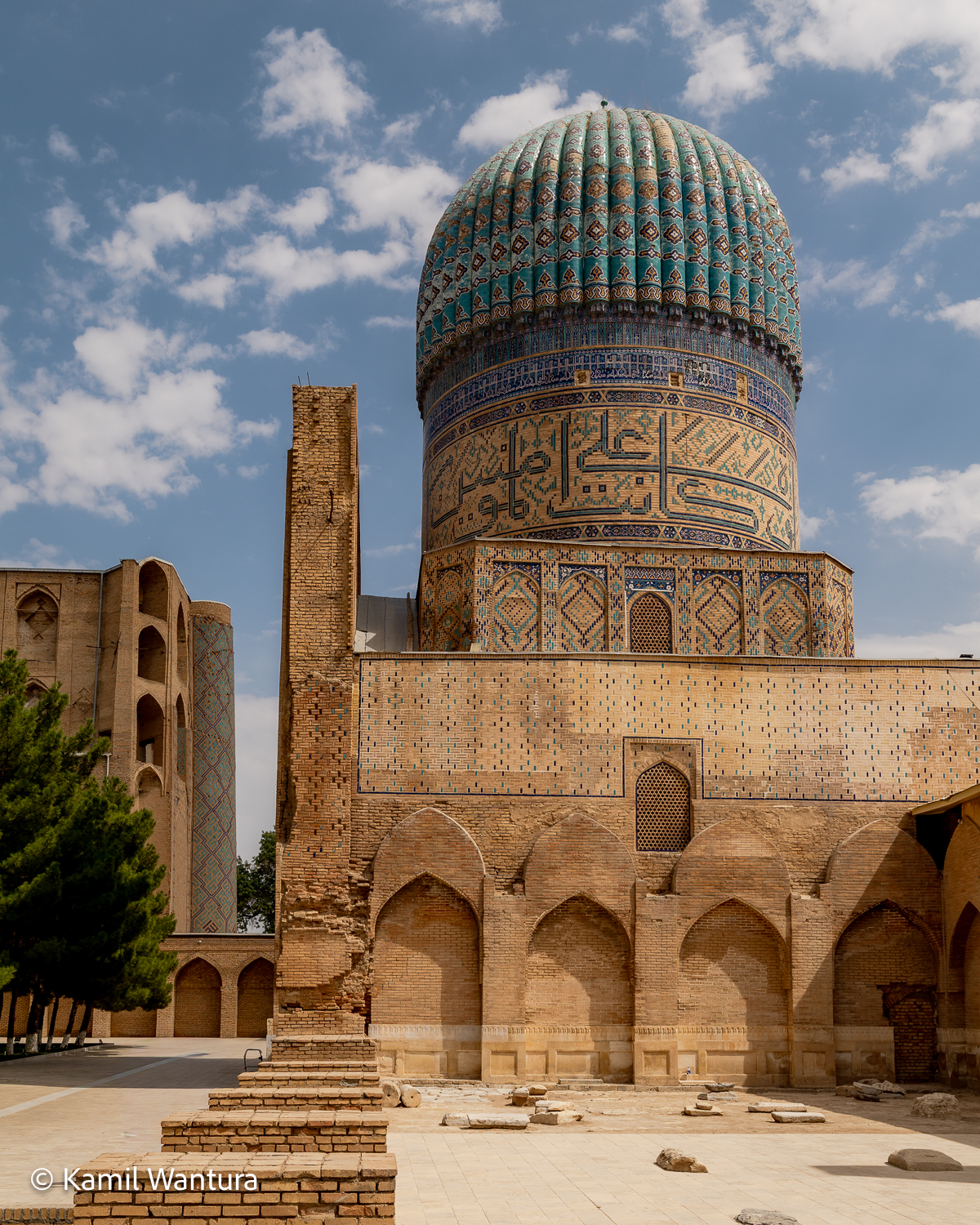
Bibi Khanym Mosque 📍 MAP
I explored the monumental scale and massive vaulted entry portal of the historic Bibi Khanym Mosque. Legend says it was built by Timur for his favourite wife. In the 15th century, it was one of the largest and most magnificent mosques in the Islamic world, pushing the very limits of construction techniques of the time.
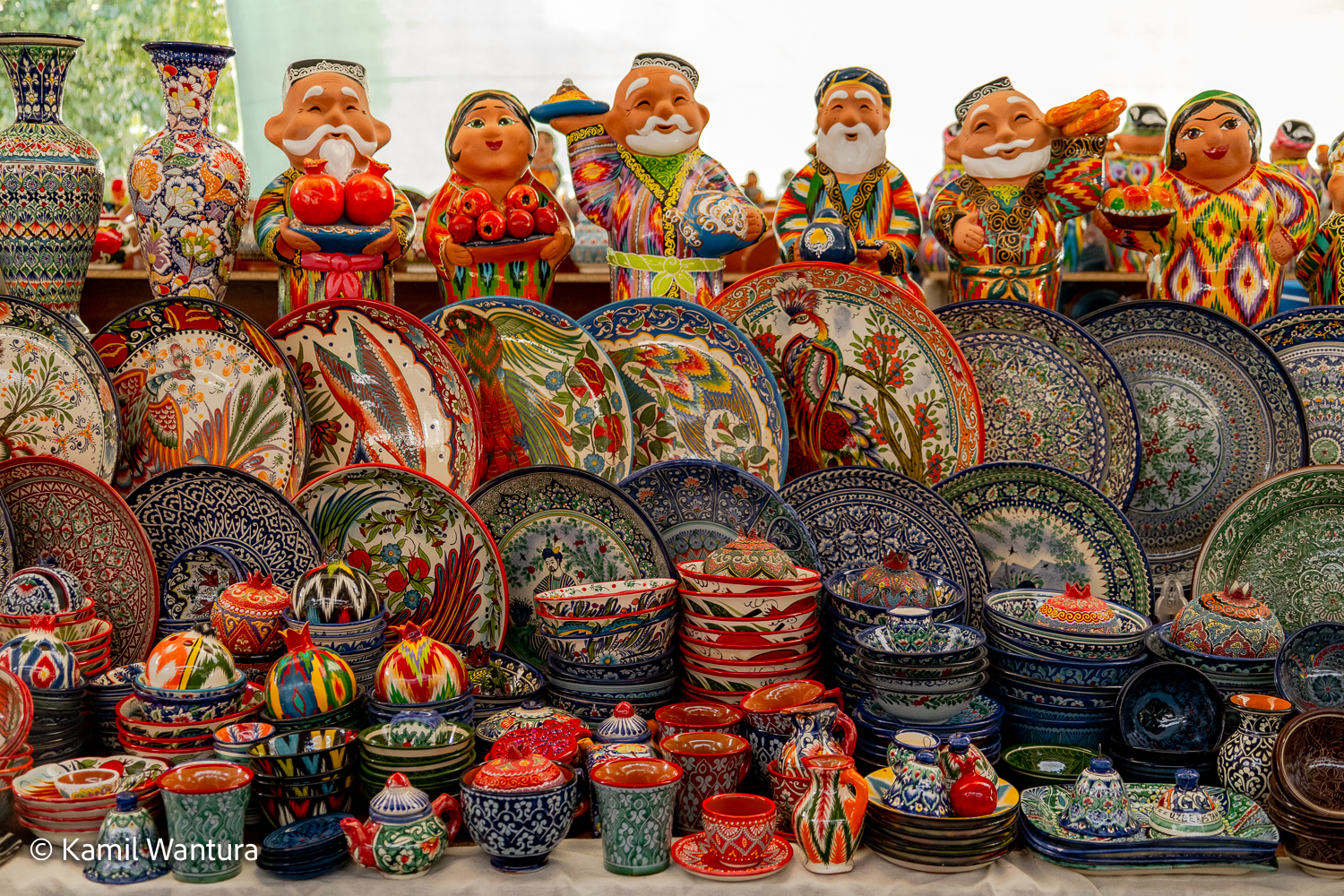
Siyob Bozori 📍 MAP
I dived into the adjacent, bustling market full of local atmosphere, sounds, and vibrant dynamic colours. This is the largest and oldest bazaar in Samarkand, serving as a vital hub of daily life where locals trade the famous round Samarkand bread, fresh produce, and colourful textiles just as they have for countless generations.
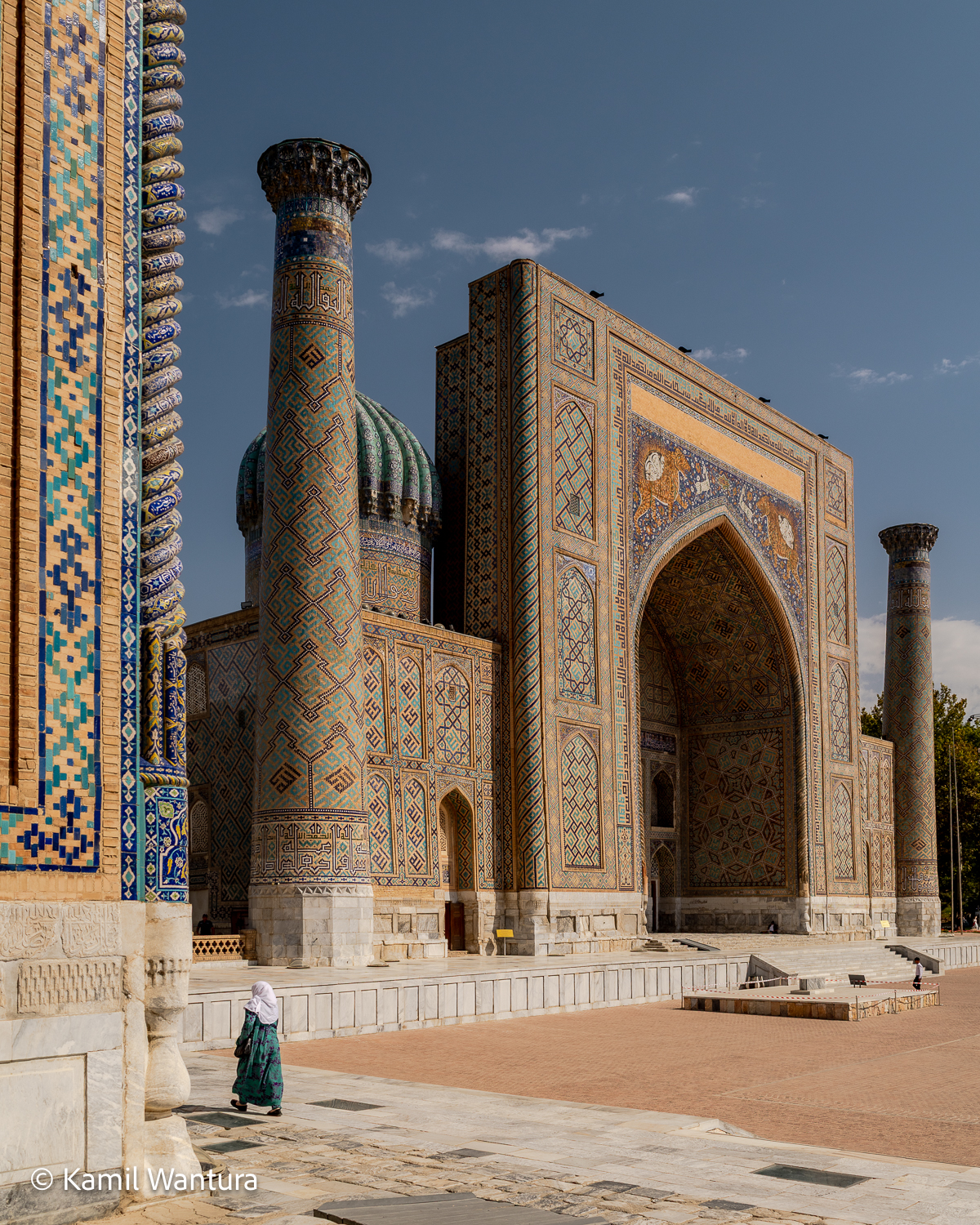
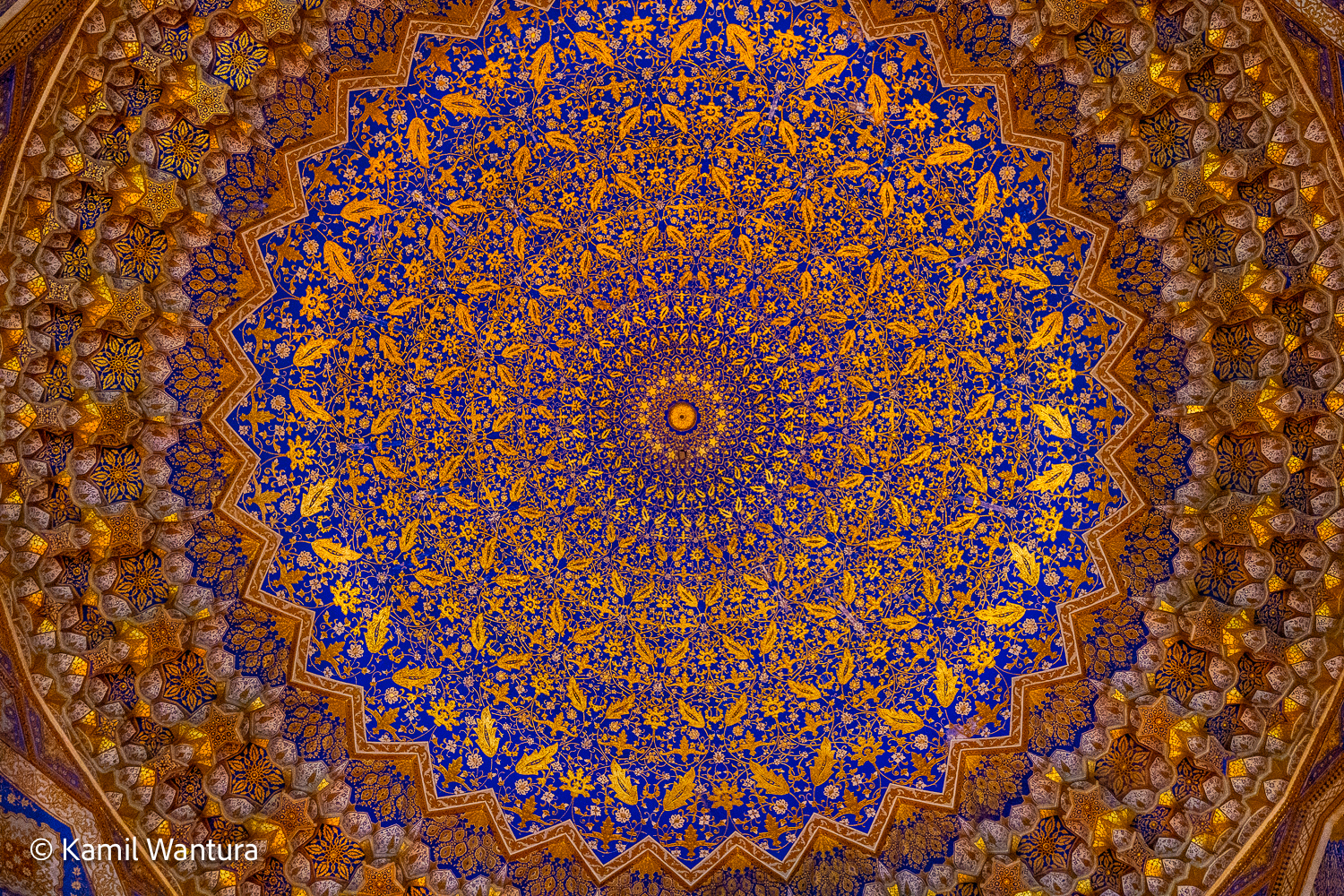
Registan Square 📍 MAP
I wandered through Registan Square, taking in the monumental scale of the three grand madrasahs. Once the commercial heart of medieval Samarkand, it is framed by the Ulugh Beg, Tilya Kori, and Sher Dor madrasahs. These former centres of Islamic scholarship are completely adorned in majestic majolica tiles that leave visitors speechless.
Day 4: Blue Avenues & Evening Lights
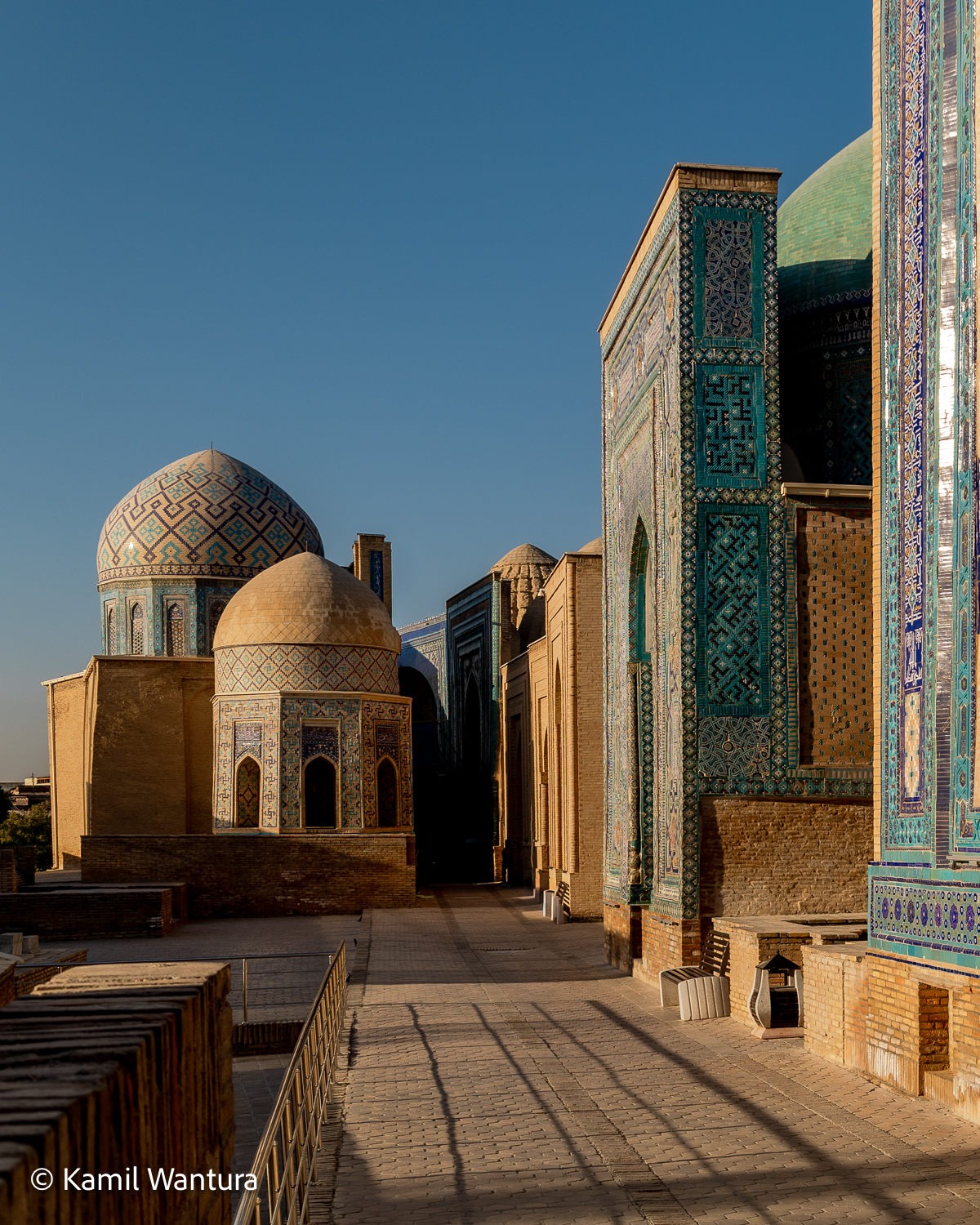
Shah i Zinda Necropolis 📍 MAP
I walked down an avenue of breathtaking mausoleums covered in every shade of blue imaginable. This sacred necropolis contains the tombs of royalty and revered religious figures, including Qusam ibn Abbas, a cousin of the Prophet Muhammad. The stunning tilework here represents the absolute pinnacle of ceramic art in the region.
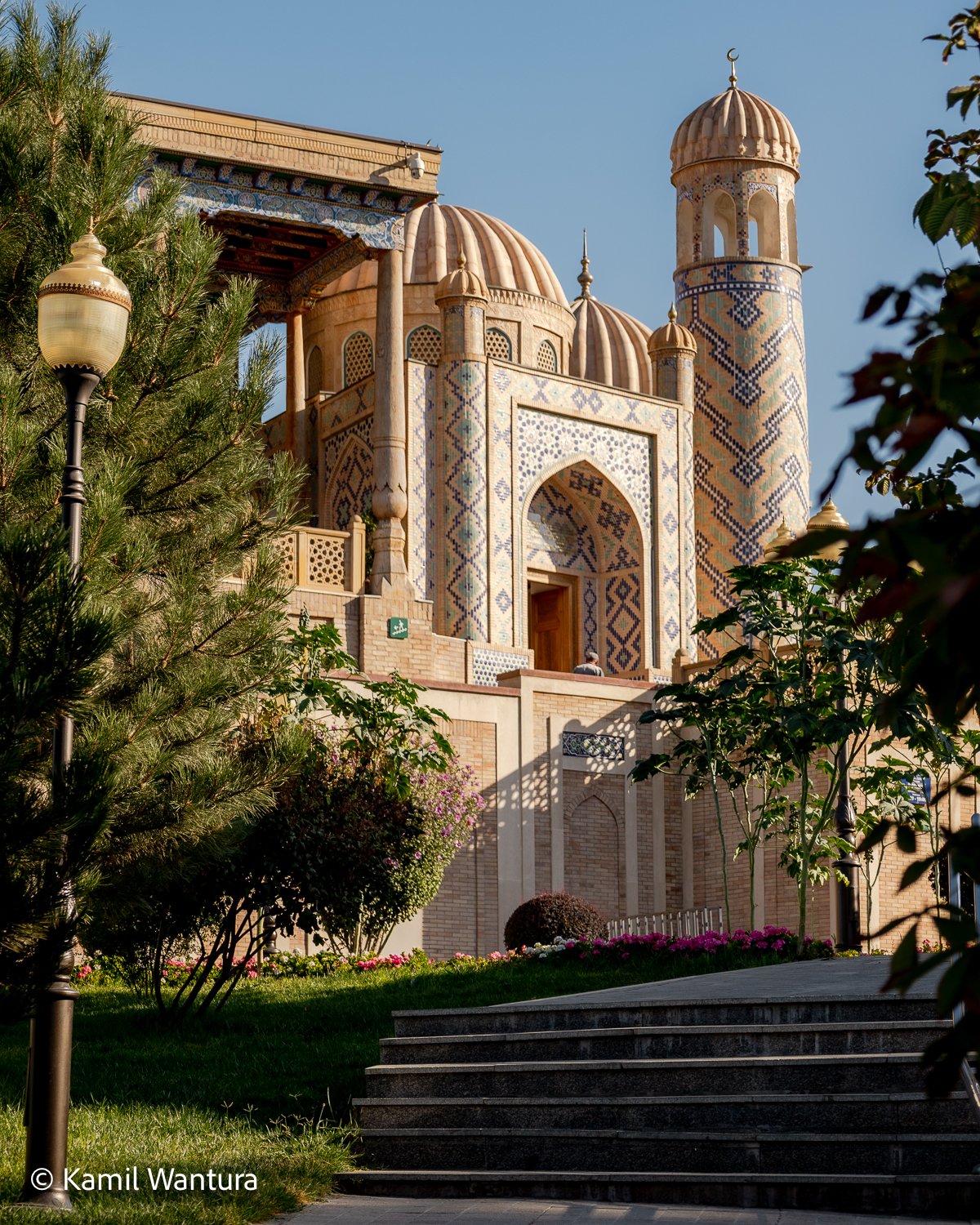
Hazrat Khizr Mosque 📍 MAP
I documented the beautifully detailed wooden pillar terraces and took in the elevated panoramic view overlooking the city. Built on the site of the oldest mosque in Samarkand, it honours the patron saint of travellers. The intricately carved wooden columns and vibrantly painted ceilings showcase exquisite traditional craftsmanship.
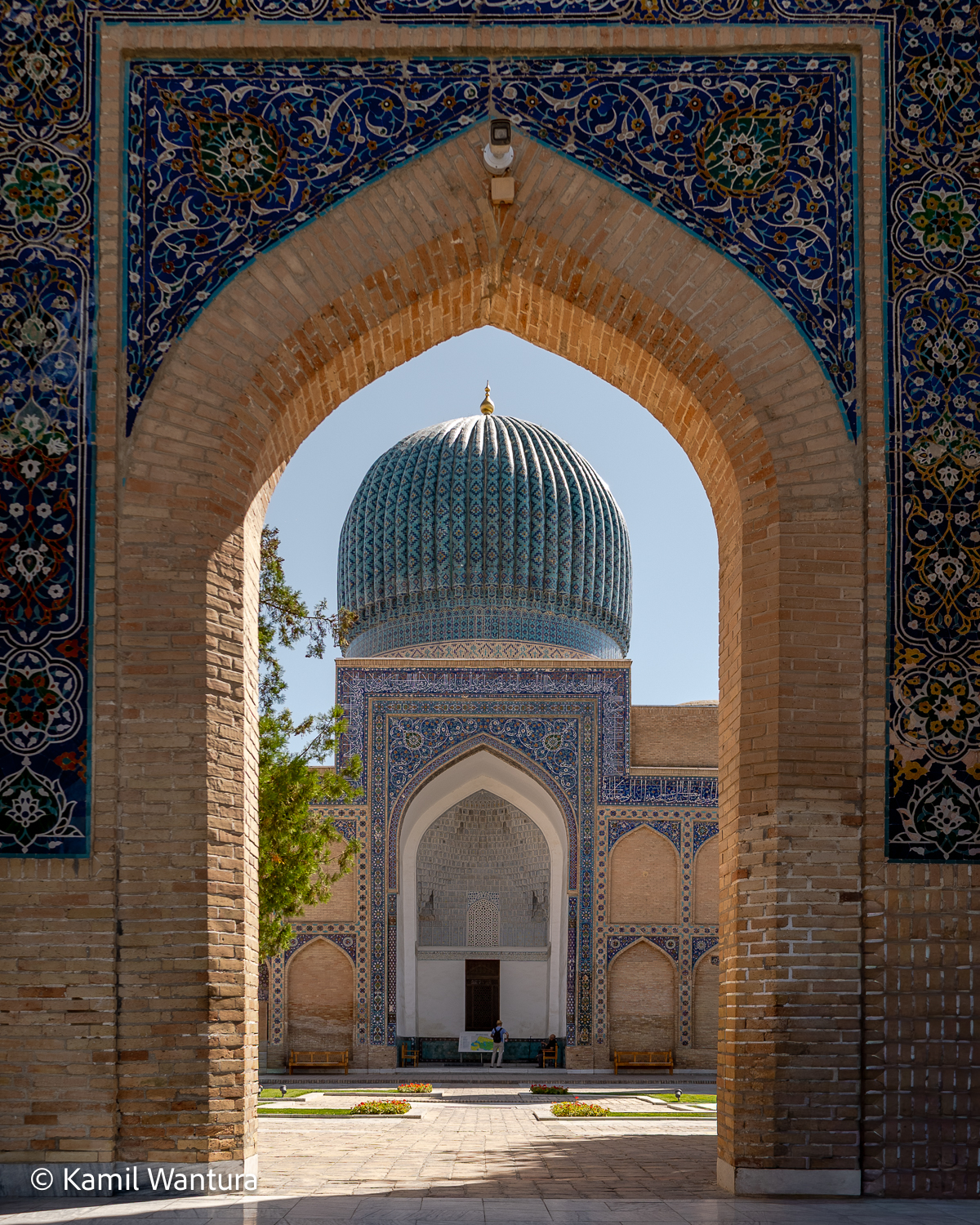
Amir Temur Mausoleum (Gur i Amir Complex) 📍 MAP
I visited the final resting place of the conqueror Timur, featuring a heavily ribbed azure dome and an interior drenched in gold leaf. Gur i Amir translates directly to Tomb of the King. Its architectural style heavily influenced later Mughal masterpieces like the Taj Mahal, and the interior is richly decorated with pure gold and intricate papier mache designs.
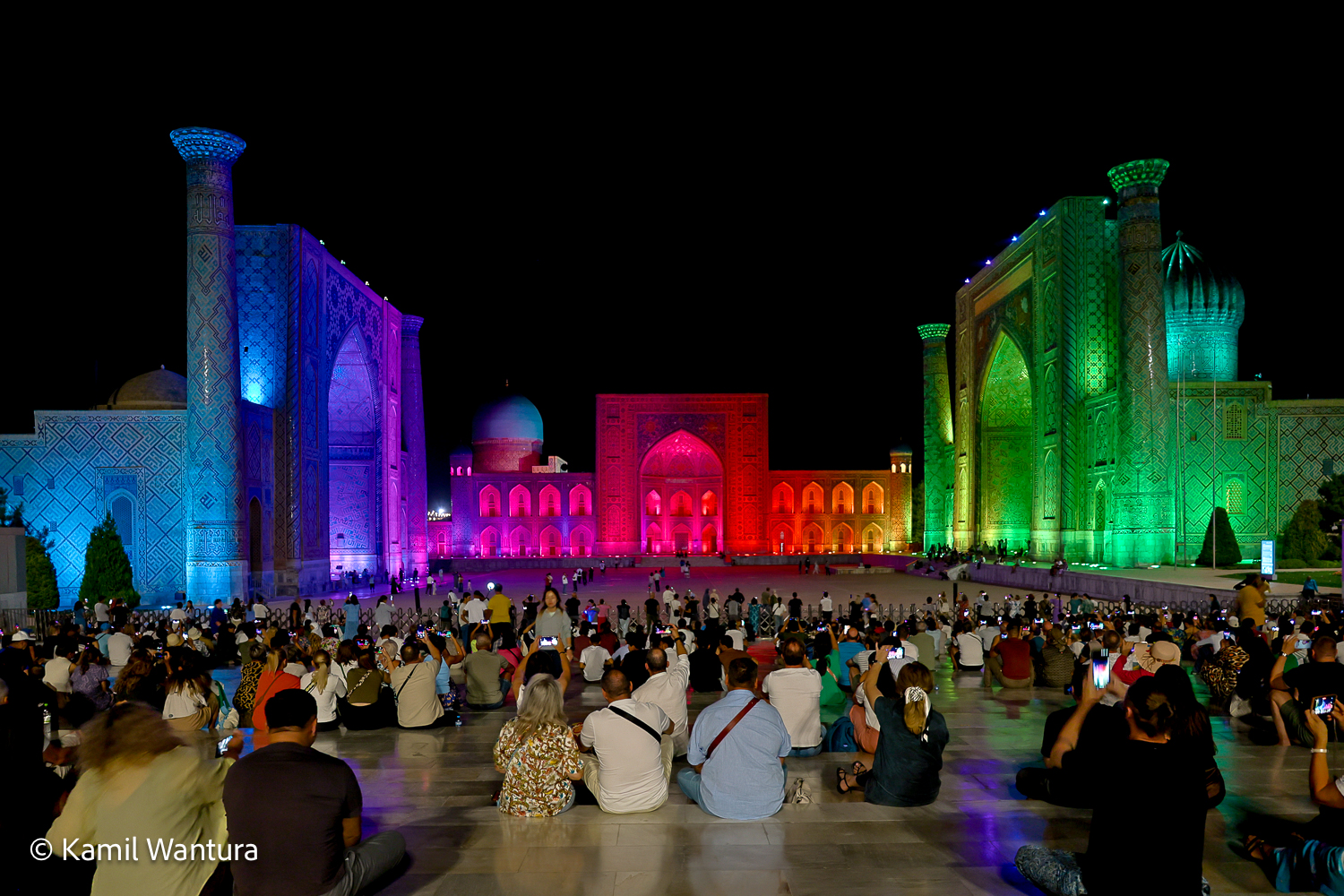
Registan Light Show 📍 MAP
The grand structures of the square were illuminated with a spectacular evening light show. The brightly projected lights narrate the long and complex history of the Silk Road and the Timurid Empire, bringing the ancient facades to life with vibrant moving imagery against the night sky.
Days 5 to 6: Bukhara, The Timeless Oasis
I captured timeless mud brick streets, uniquely styled monuments, and historic city citadels.
Day 5: Desert Crossings & Hidden Symmetries
Chor Minor Monument 📍 MAP
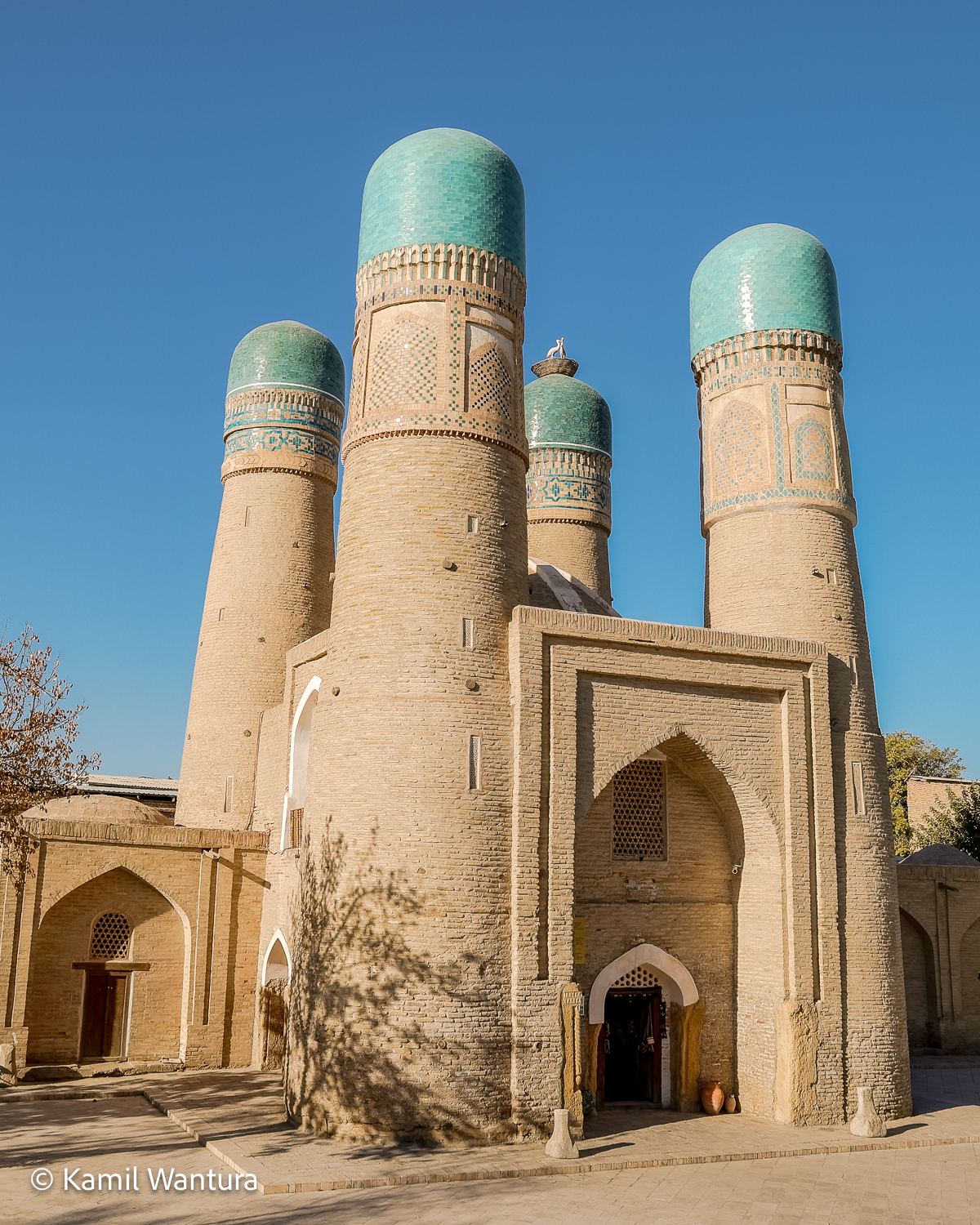
I arrived in Bukhara and visited Chor Minor, an architectural gem featuring four distinct towers topped with turquoise tiles. Originally serving as a grand gatehouse for a now destroyed madrasah, its four unique minaret like towers are thought to represent the four cardinal points or the four major world religions, reflecting a deep spirit of historical tolerance.
Poyi Kalon Complex 📍 MAP
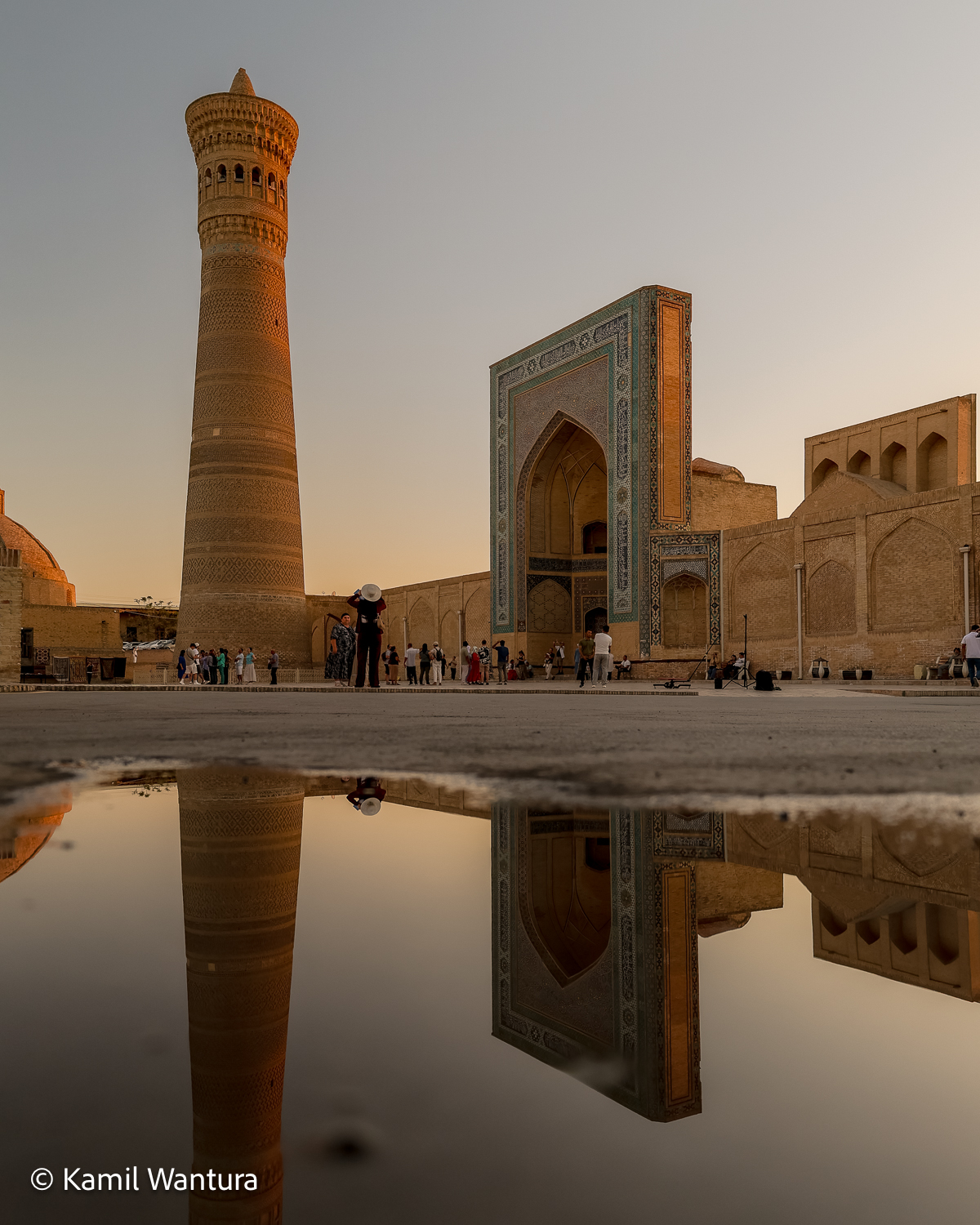
I explored the majestic plaza flanked by the towering minaret and the elegant entry arches of the mosque. This incredible complex represents the spiritual heart of Bukhara. The vast courtyard of the mosque can hold thousands of worshippers, whilst the Mir i Arab madrasah situated opposite still functions as an active Islamic seminary today.
Day 6: Madrasahs & Fortresses
Nodir Devonbegi Madrasah 📍 MAP
I documented the unusual and intricate peacock mosaic work detailing the grand front entry portal. Initially built as a caravanserai for travelling merchants, it was later converted into a madrasah. The bright depiction of living creatures on the facade is a very rare departure from traditional Islamic geometric and calligraphic design norms.
Khodja Nasreddin Statue 📍 MAP
I captured the local street atmosphere and community interactions around the historic bronze monument. Nasreddin is a legendary satirical Sufi figure known throughout the East for his humorous folktales and moral anecdotes. Locals and visitors alike gather in this shaded plaza to pay tribute to the beloved trickster.
Ark of Bukhara 📍 MAP
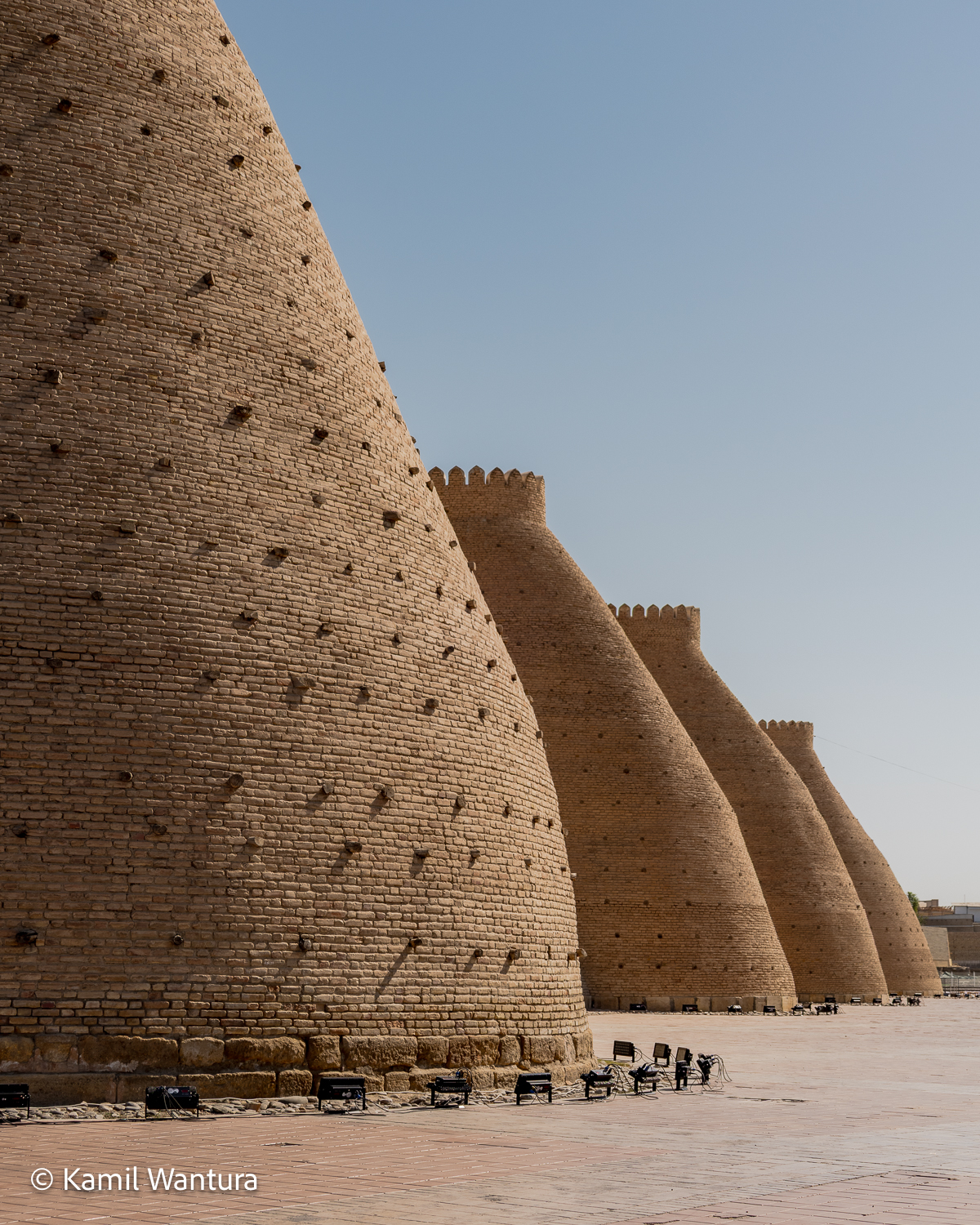
I spent the afternoon framing the massive, sweeping fifth century fortress walls that protected the ancient rulers. This massive citadel functioned as a self contained city, housing the powerful emirs of Bukhara until the early 20th century. Inside, the surviving courtyards and throne rooms offer a fascinating glimpse into royal court life and the brutal history of the emirate.
Days 7 to 9: Khiva and Desert Citadels, The Living Museum
I stepped back in time inside walled fortresses and journeyed to remote desert ruins.
Day 7: The Far West Journey
Ichan Kala Walk 📍 MAP
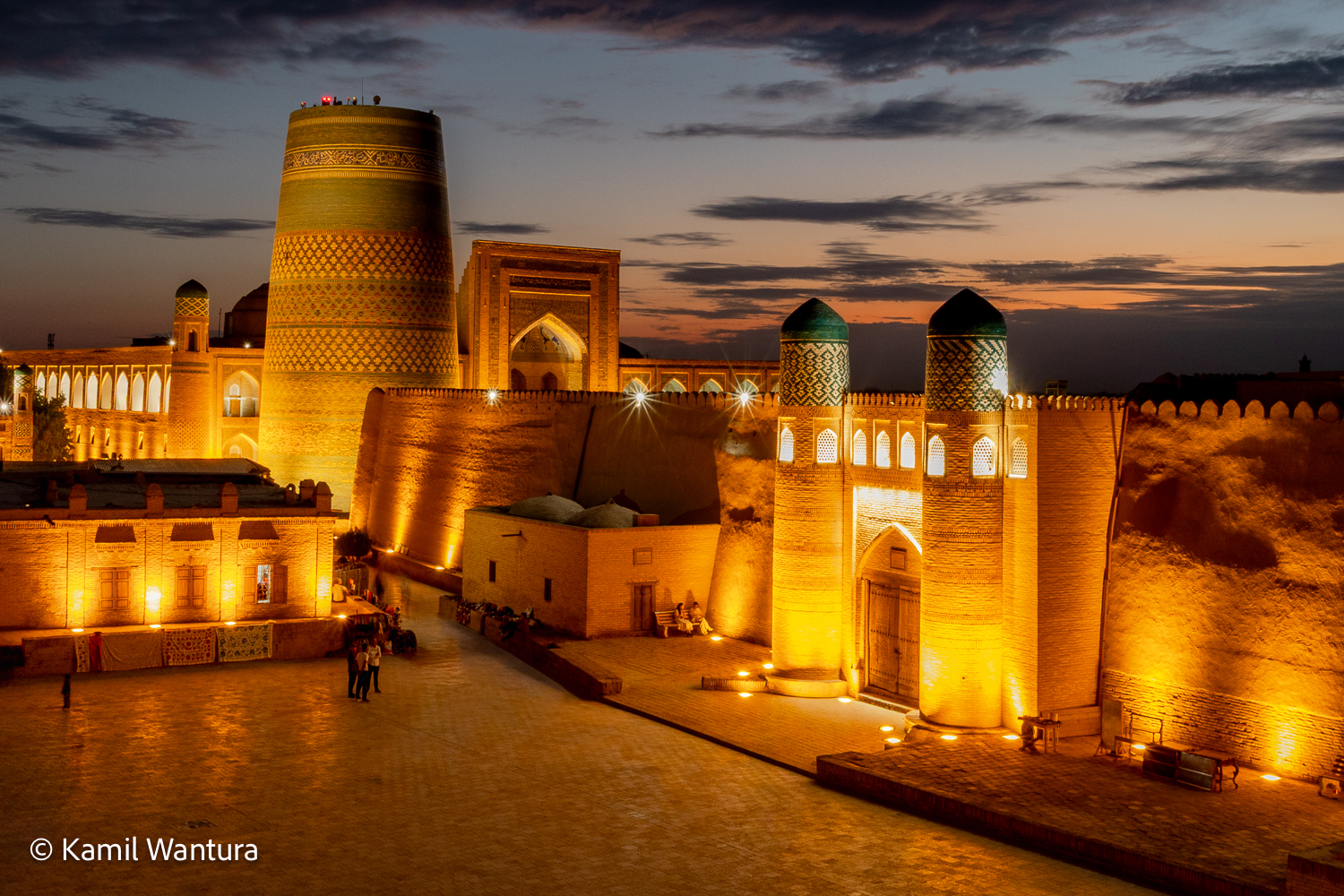
I enjoyed an enchanting evening walk around the historic mud brick walls of the inner city fortress. Ichan Kala is a remarkably preserved walled town that feels entirely suspended in time. The thick crenellated clay walls have protected this desert oasis for centuries, safely sheltering merchants, artisans, and ruling khans from the harsh environment outside.
Day 8: Inside the Living Museum
Ichan Kala Exploration 📍 MAP
I spent a full day exploring the labyrinth of sand coloured alleys, tiled minarets, and historic mosques enclosed within the city walls. Packed with over fifty historic monuments, this open air museum reveals incredible wonders around every corner, including intricate wooden carved doors, the striking unfinished Kalta Minor minaret, and the ancient Juma Mosque with its hundreds of uniquely carved wooden pillars.
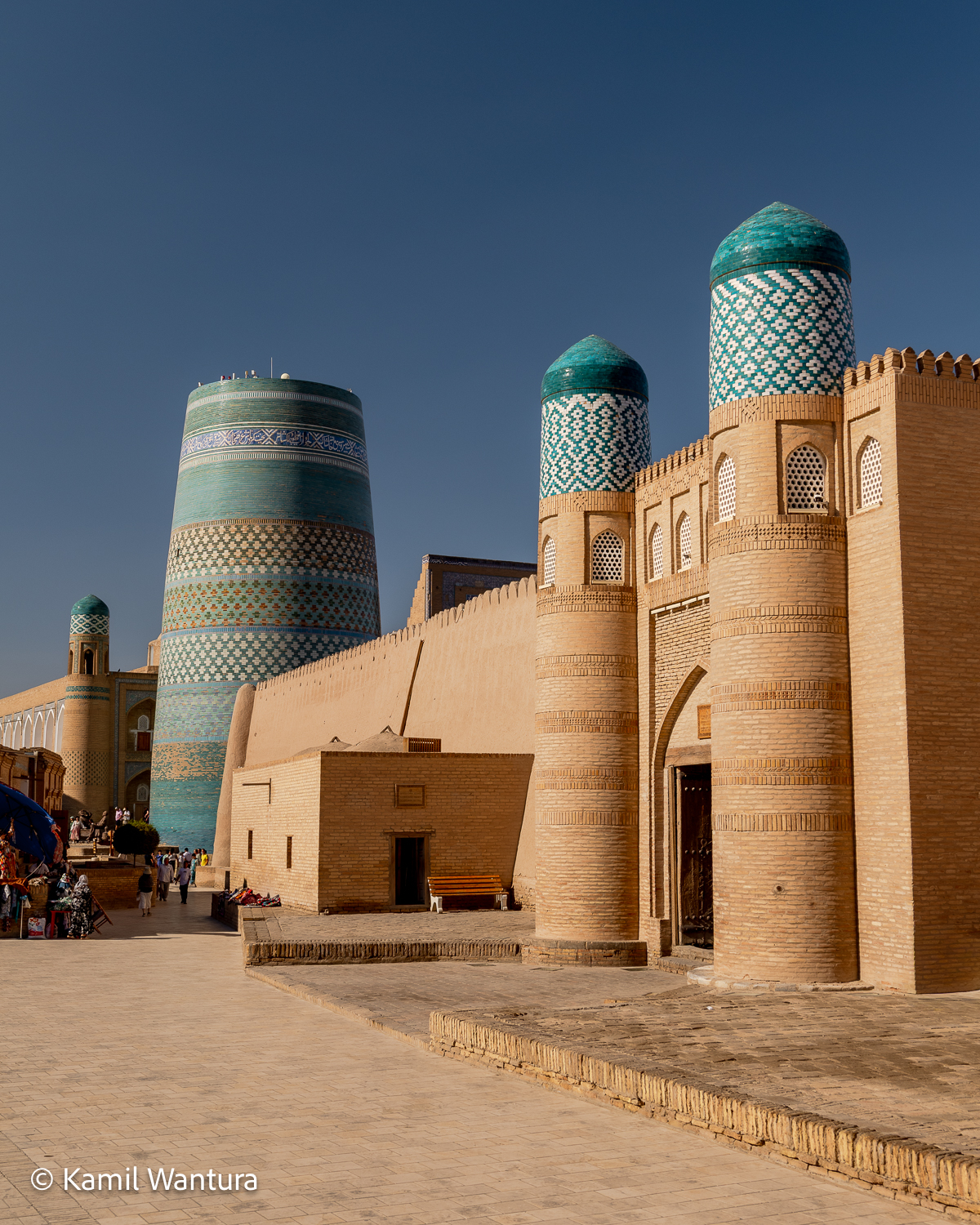
I booked a table at this Terrasa restaurant for dinner, which provided a spectacular view!
Day 9: Out into the Desert Wilderness
Ayaz Kala 📍 MAP
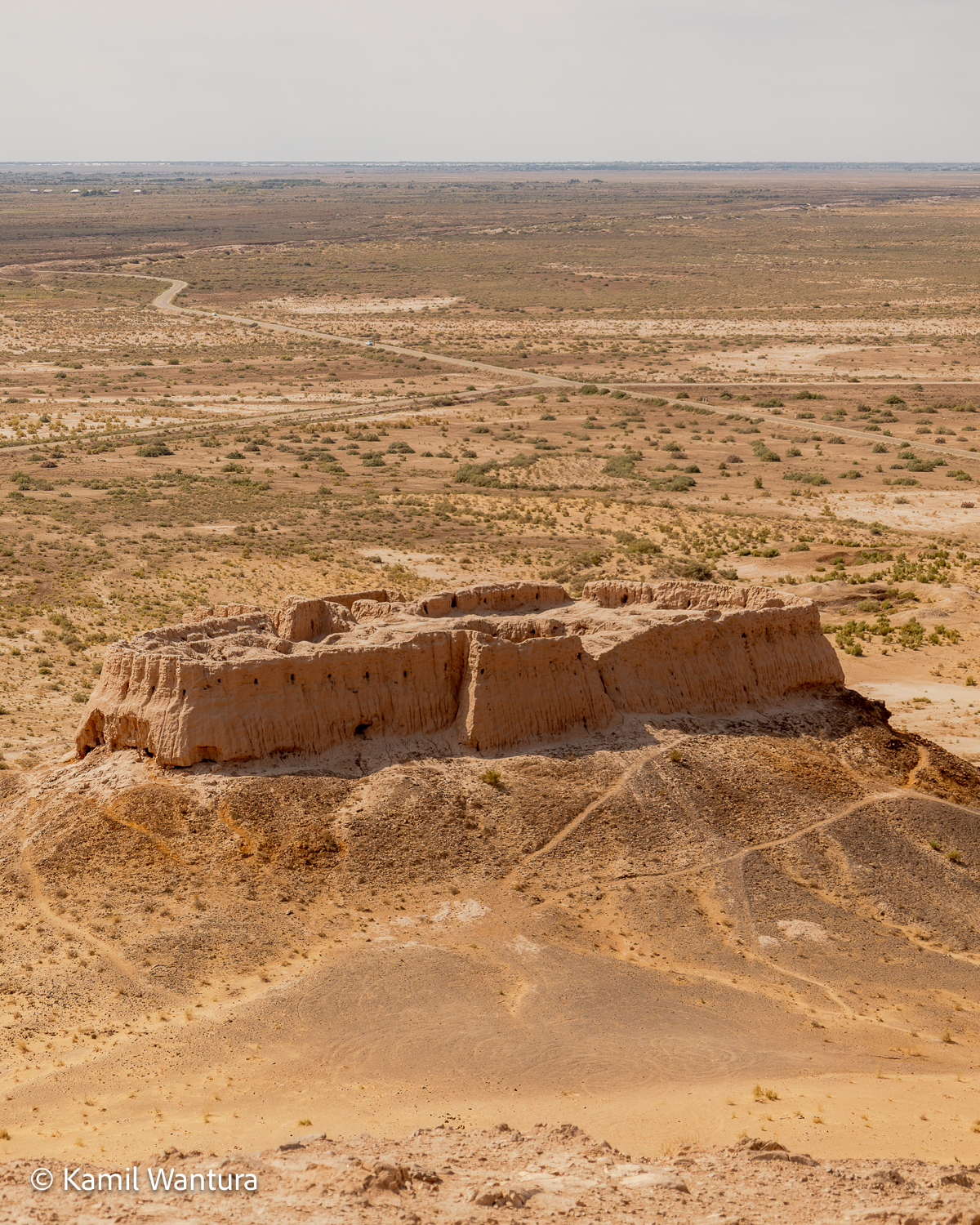
I journeyed deep out into the desert sands by private taxi to hike up the massive, windswept hill fort ruins of Ayaz Kala. Dating back over two millennia, these impressive mud brick ruins once protected the northern borders of the Khorezmian empire from nomadic raids. The sheer isolation of the site gives a profound sense of the harsh desert environment these ancient people endured.
Kyzyl Kala 📍 MAP
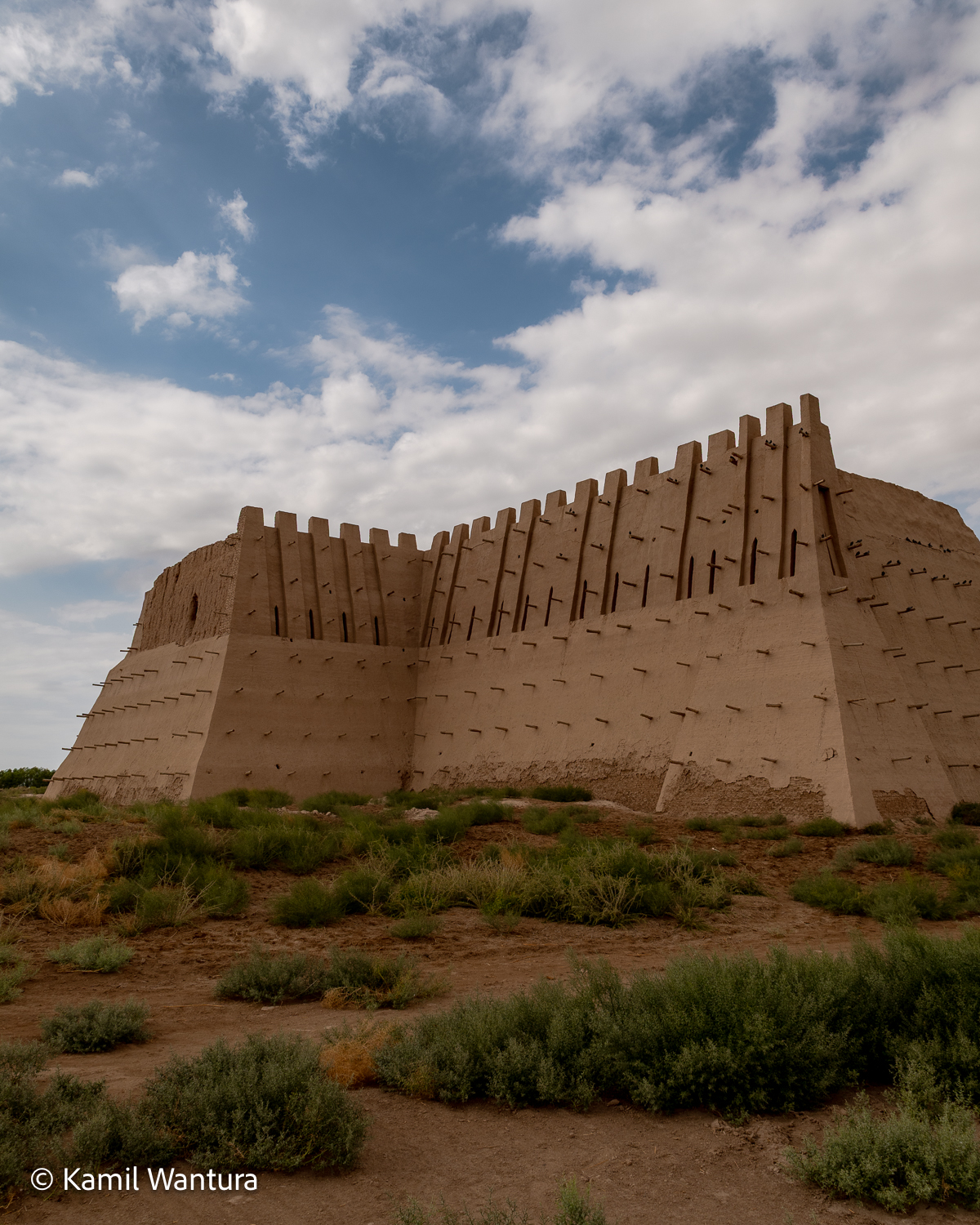
I explored the nearby square oasis stronghold fortress, documenting its unique wall slits and historic defensive engineering. Known locally as the Red Fortress, Kyzyl Kala was an essential part of a long chain of fortifications guarding the rich agricultural settlements of Khorezm. The double walls and sophisticated arrow slits demonstrate incredibly advanced ancient military architecture.
Day 10: Departure, Journey Home
Departure Flight 📍 MAP
My journey concluded as I departed with memory cards full of spectacular images. Reflecting on the ten days spent travelling across the country, the trip offered an unforgettable immersion into the heart of the Silk Road, perfectly blending rich regional history, incredibly welcoming locals, and timeless architectural wonders.
THE SILK ROAD SURVIVAL & LOGISTICS GUIDE
Essential Ground Data for Travel & Photography Planning
Before packing camera bags and heading out, navigating Uzbekistan smoothly requires tactical preparation. The country’s infrastructure has modernised rapidly, meaning old travel guidebooks are often outdated. Below is the essential, practical information needed to turn a photography trip into a seamless journey.
1. Money, Payments, & Tipping
Uzbekistan runs heavily on cash for day to day transactions, though digital payment card networks are expanding in major hotels.
| Use Cash For | Use Cards For |
|---|---|
|
Local markets and bazaars Small regional guesthouses Regional taxi drivers Tips and daily micro transactions |
High end hotels in Tashkent Major hotels in Samarkand Upscale tourist restaurants ATM cash withdrawals |
2. Transportation
Navigating the long geographical distances across Uzbekistan requires advance booking rather than spontaneous planning.
High Speed Trains: For the Tashkent–Samarkand–Bukhara route, the Afrosiyob high-speed train is the premier choice. It is clean, air-conditioned, and remarkably fast. Tickets must be purchased weeks in advance via the official Uzbekistan Railways portal, as they sell out almost instantly. You can check schedules and purchase tickets directly via Uzbekistan Railways.
The Cross-Desert Rail: For long stretches like Bukhara to Khiva, the slower trains offer dedicated bed seats that make the five-plus hour desert journey highly comfortable. You can check schedules and purchase tickets directly via Uzbekistan Railways.
Commuting between stations and town centres: Utilise the mobile application Yandex Go in Tashkent, Samarkand, and Bukhara. Using this app for private cars completely eliminates aggressive price haggling on the street, guarantees a fixed rate, and ensures the ride is GPS-tracked.
3. Mobile Internet Setup
Having reliable mobile data is mandatory for downloading train tickets, booking rides via apps, translating signs, and navigating ancient alleyways.
The best option is purchasing an eSIM (such as Airalo) prior to arrival. Download Airalo app. Get GBP £2.50 off your first eSIM purchase with Airalo. Use code KAMIL9100 when you sign up or at checkout. https://airalo.go.link/6HJXX
Alternatively, buy a local physical SIM card from provider kiosks (such as Ucell, Mobiuz, or Beeline) directly at the Tashkent Airport arrivals hall. This requires your physical passport with the immigration entry stamp, and activation takes less than an hour.
4. Monument Rules & Cultural Etiquette
Photographing historic Islamic architecture and active sacred spaces in Uzbekistan requires a blend of digital strategy and cultural respect.
Photography Fees
Many major madrasahs and mausoleums across Samarkand, Bukhara, and Khiva charge a nominal, separate photography ticket fee at the entrance gate. Pay this fee willingly to avoid being stopped by wardens inside the complexes.
Gear Restrictions
While standard handheld camera equipment is welcomed everywhere, tripods and drones are heavily restricted. Drones are strictly illegal to bring into Uzbekistan without intensive, pre-approved government permits, and custom officials will confiscate them at the border. Keep your setup light and mobile.
Dress Protocol & Cultural Safety
When entering active mosques or shrines—such as the Holy Assumption Church or parts of Shah-i-Zinda—modest clothing is mandatory. Ensure shoulders and knees are completely covered, and women should carry a lightweight scarf in their camera bag to cover their head when required. Always remove footwear where indicated. When photographing locals, a friendly smile and a polite nod showing the camera is usually met with incredible warmth and hospitality.
Quick-Reference Travel Checklist
| Category | Action Item & Protocol |
|---|---|
| Transit App | Download and configure the Yandex Go app before leaving your arrival airport for hassle-free city transport. |
| Booking Window | Secure your Afrosiyob high-speed train tickets exactly 45 days in advance of travel on the official website: https://railway.uz/en/ |
| Drone Laws | Leave all drones and unmanned aerial vehicles at home to prevent strict confiscation and legal penalties at the border. |

Looking forward to your next post!
There will be many more! Thank you!